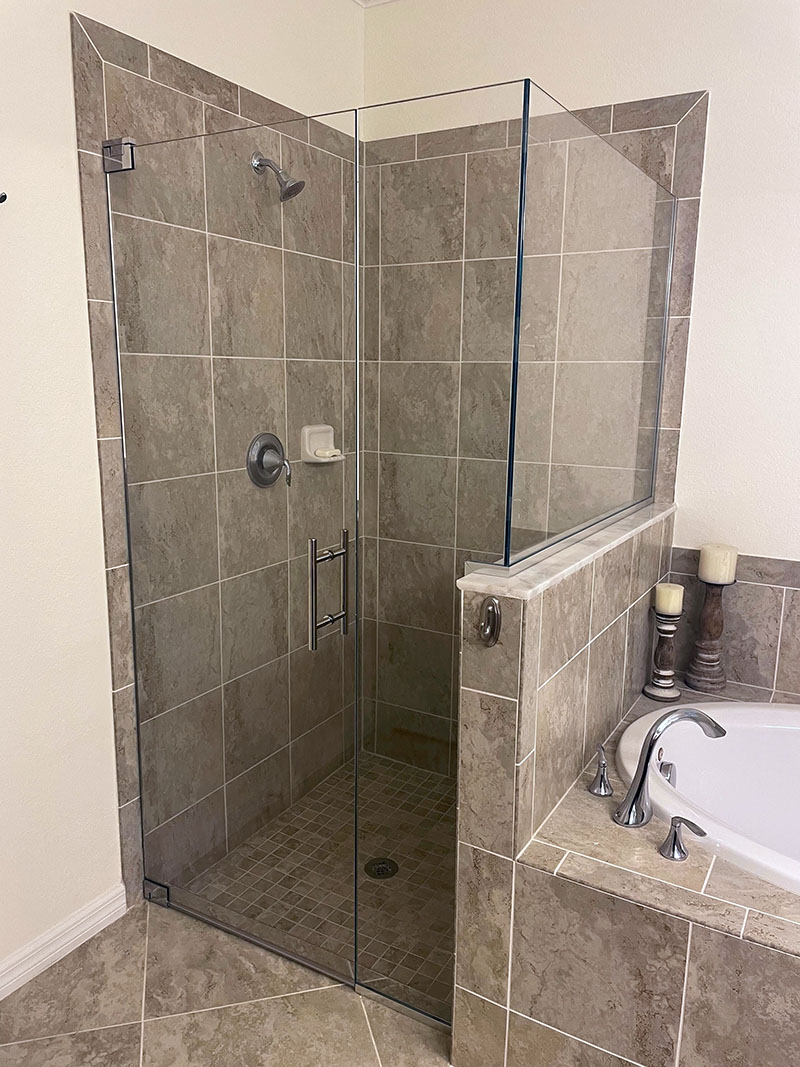
Sliding vs. Swinging Frameless Shower Doors
Which Is Best for Your Bathroom Layout?
This guide gives you everything you need to make the right call: a thorough comparison of both door types, a look at how specific bathroom layout factors should influence your decision, a side-by-side comparison table, and clear best-for recommendations.
Understanding the Two Door Types
Before we get into layout considerations, it helps to understand exactly what each door type is and how it works.
Frameless Sliding Shower Doors (Bypass Doors)
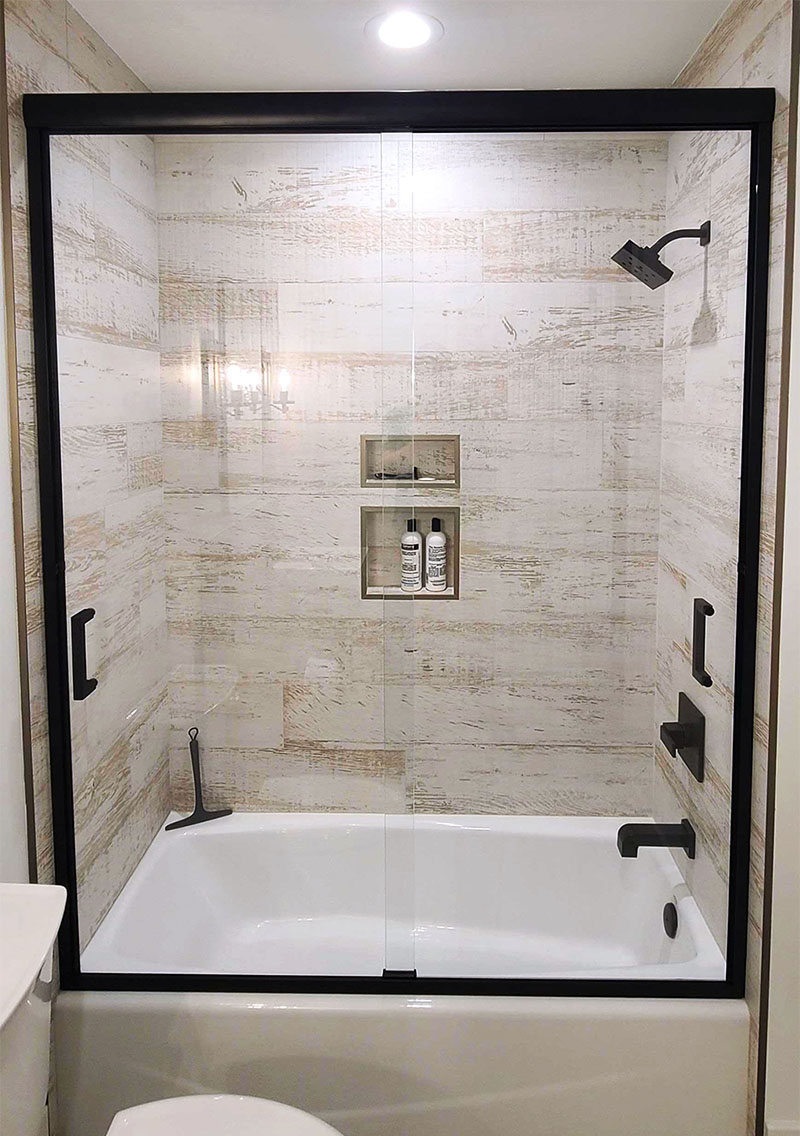
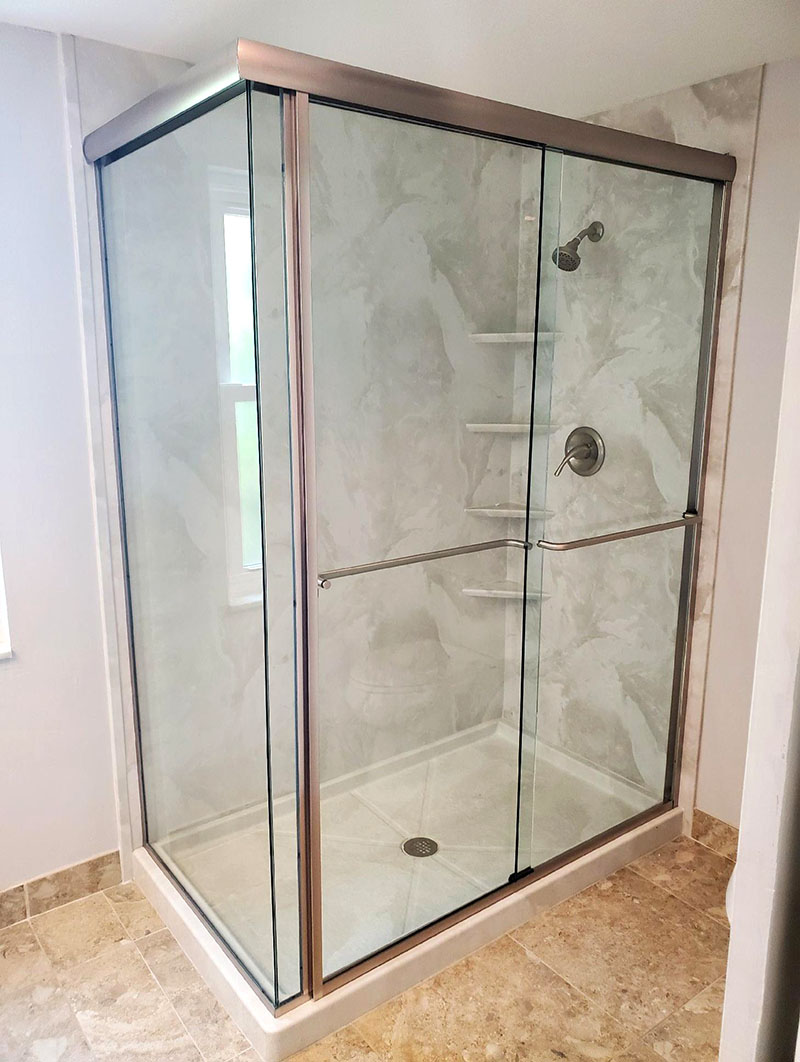
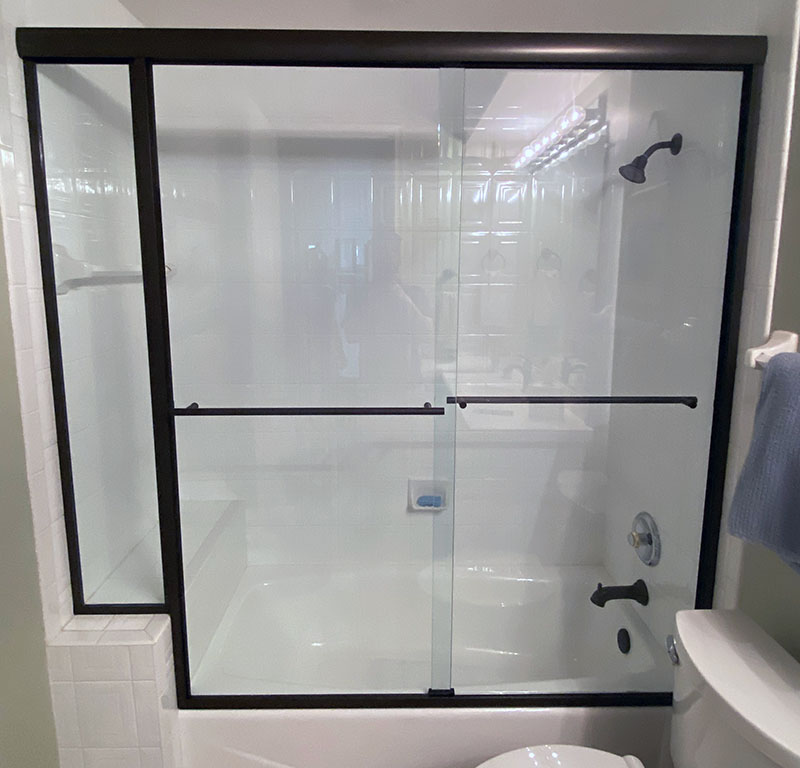
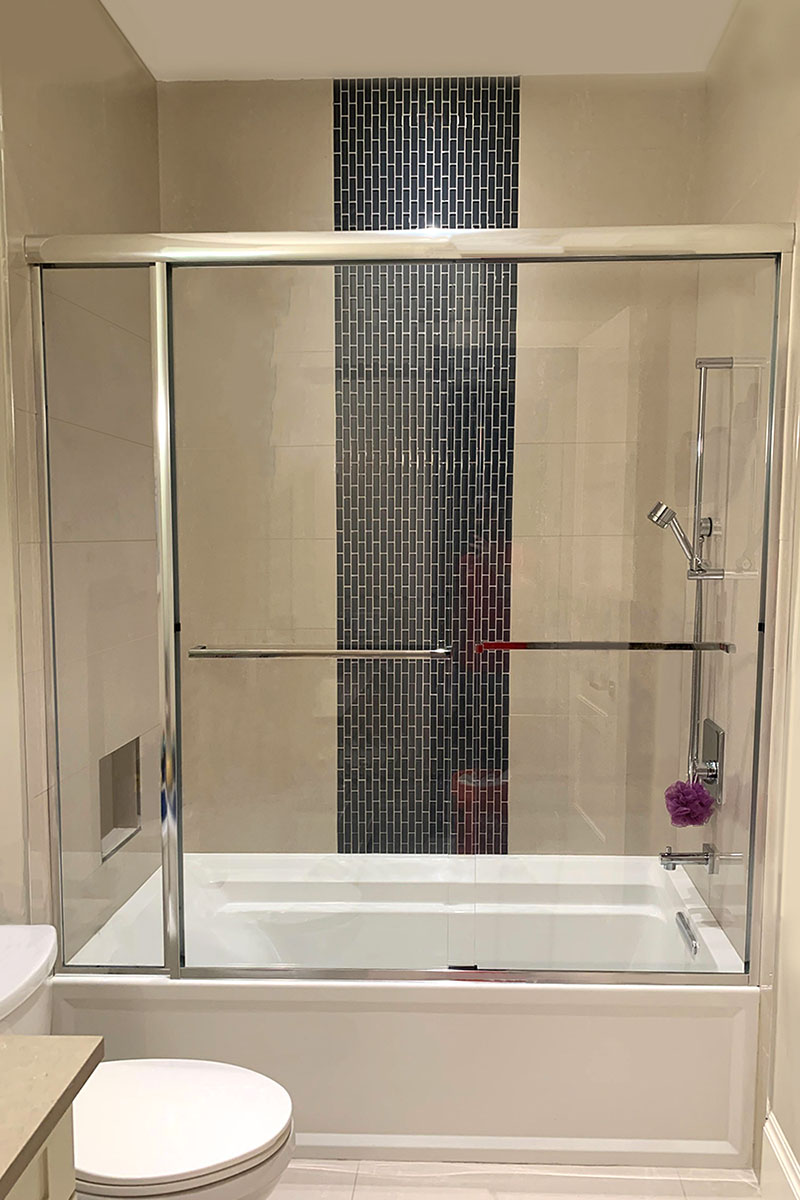
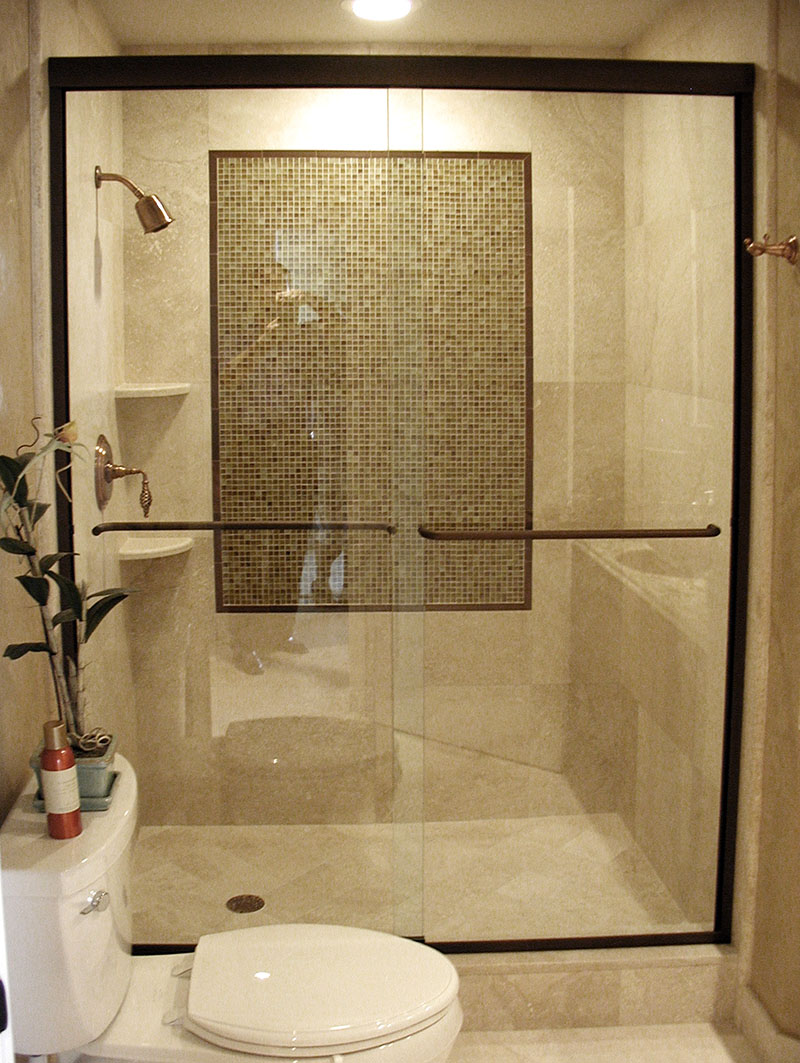
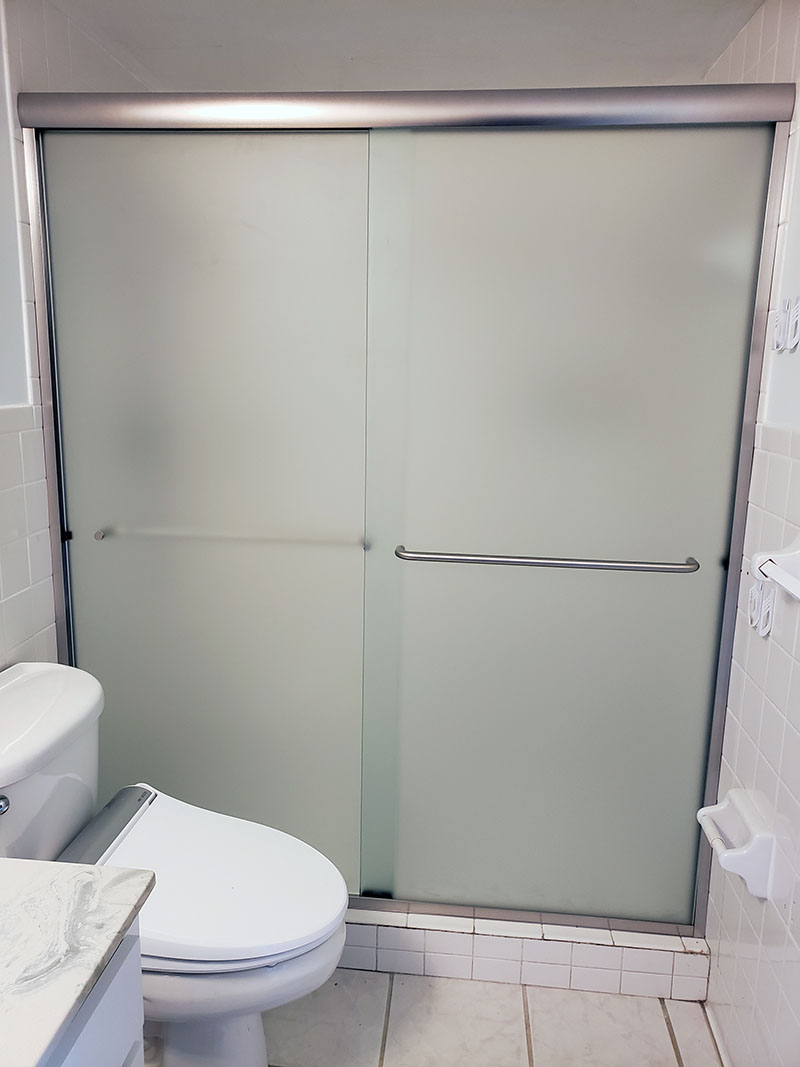
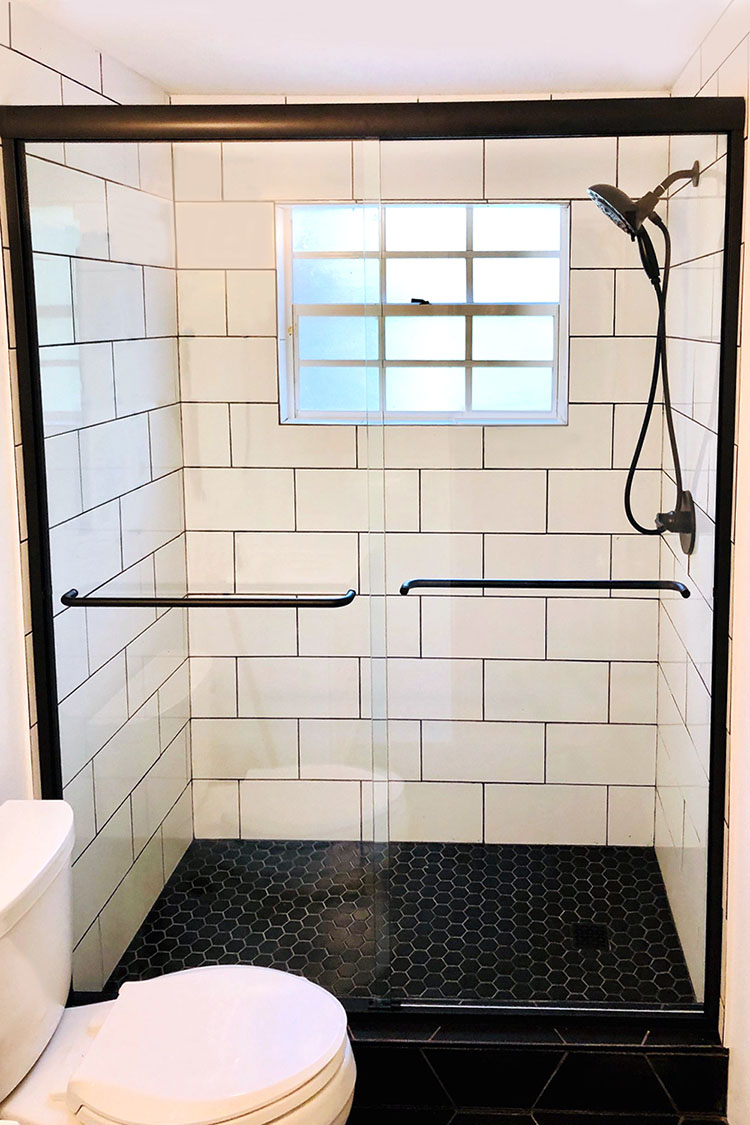
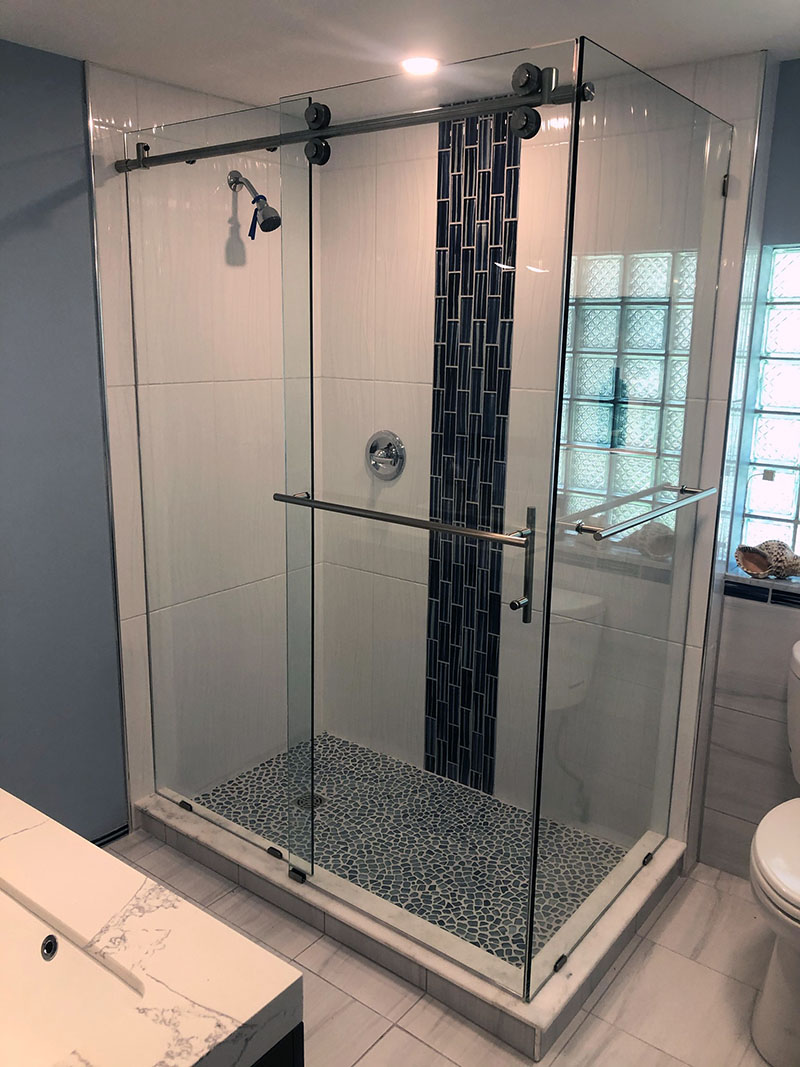
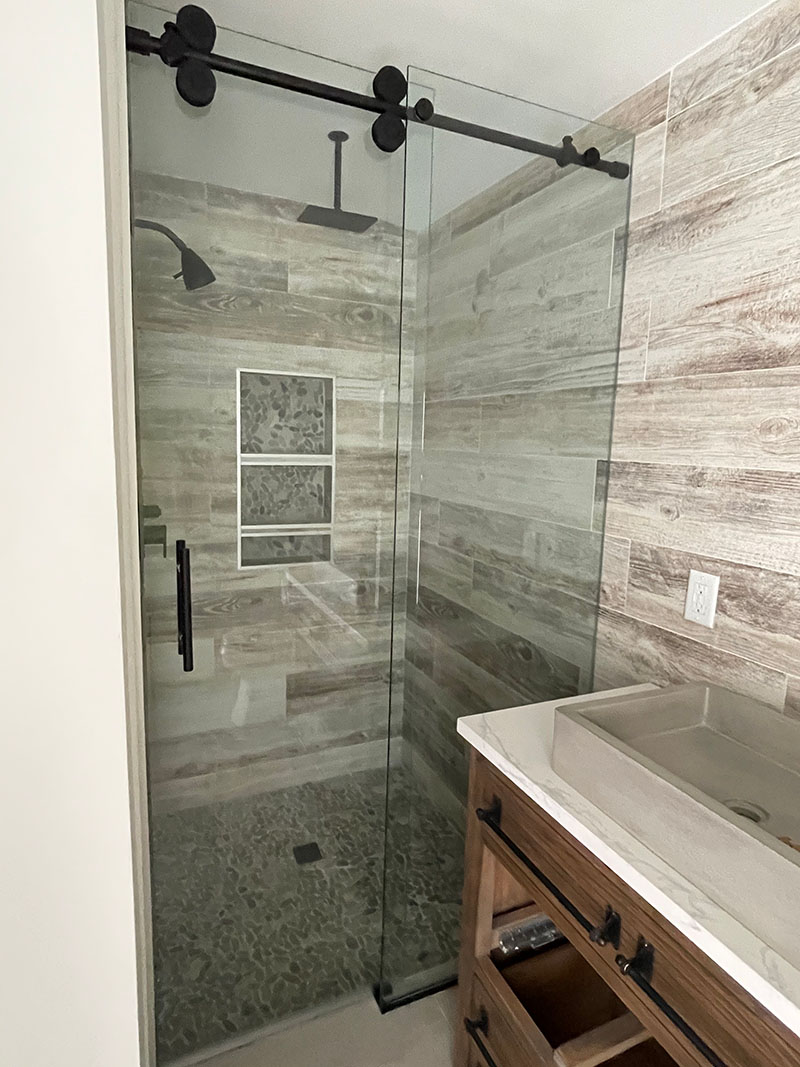
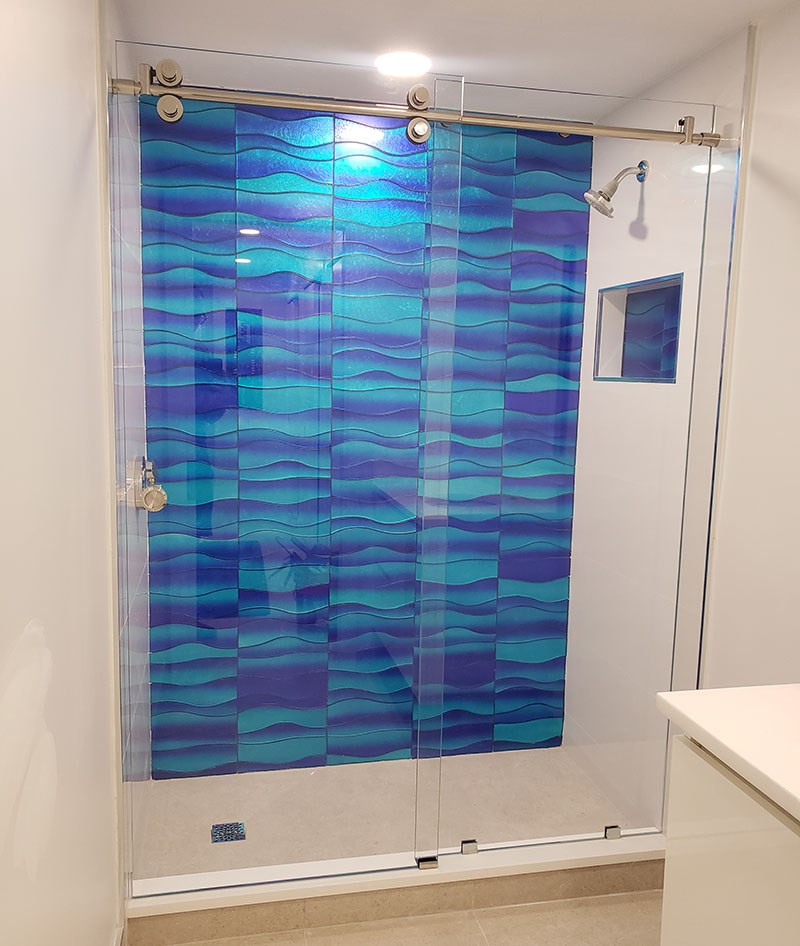
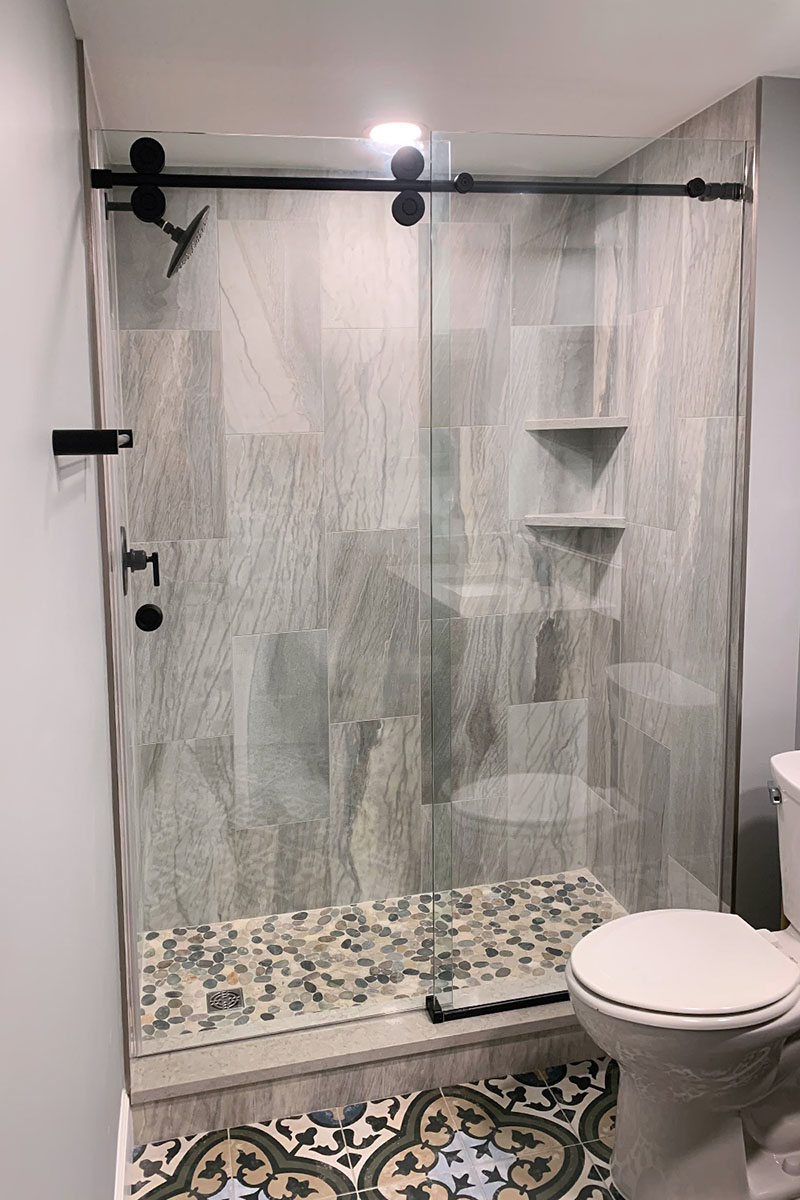
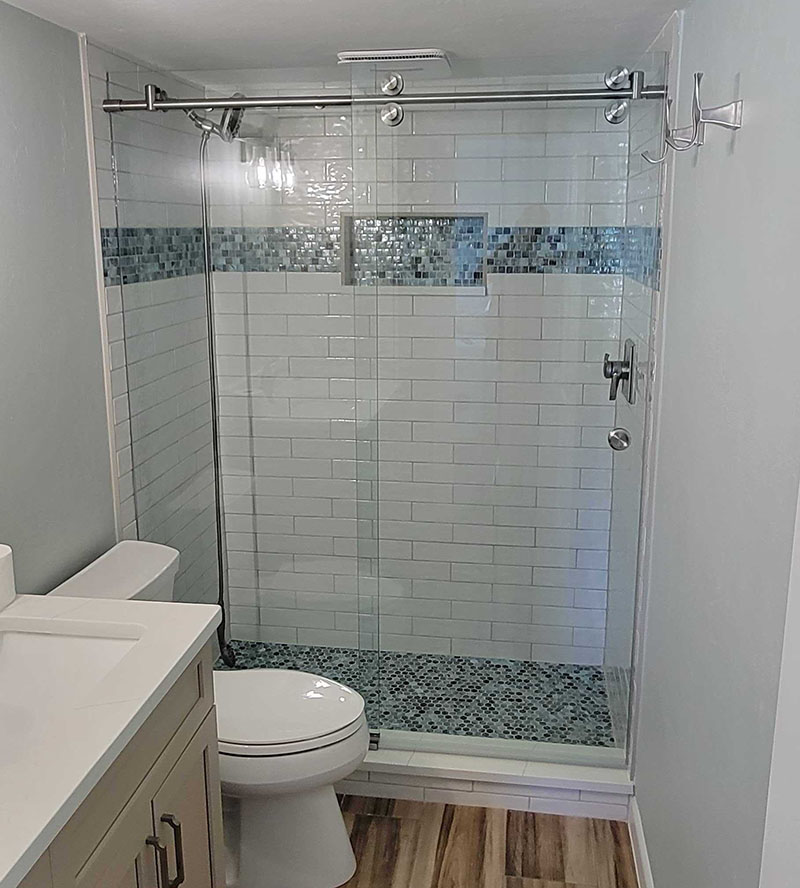
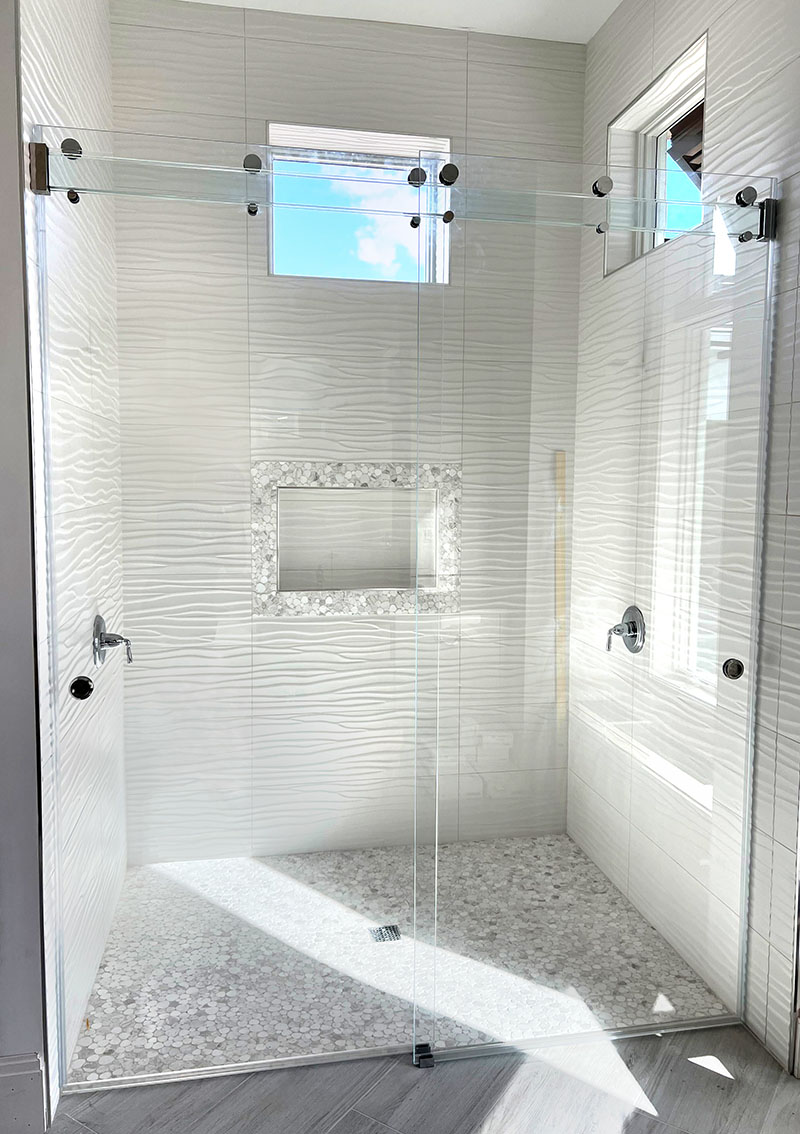
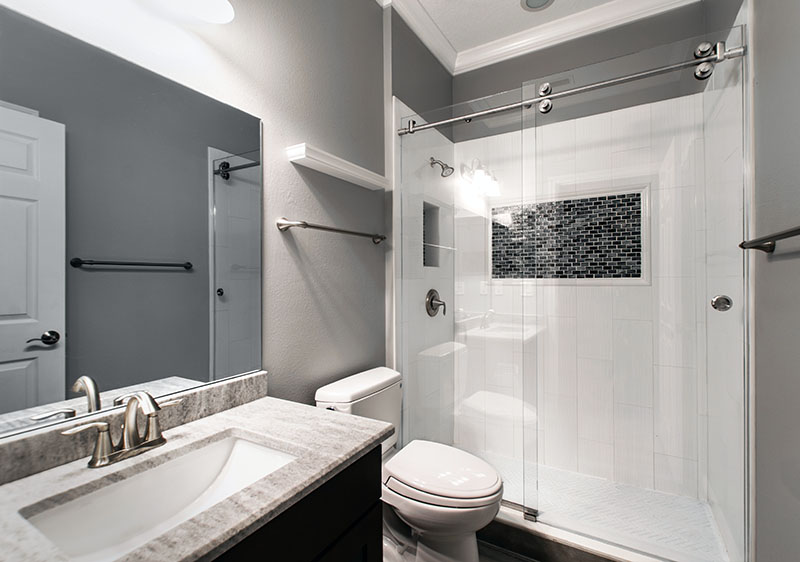
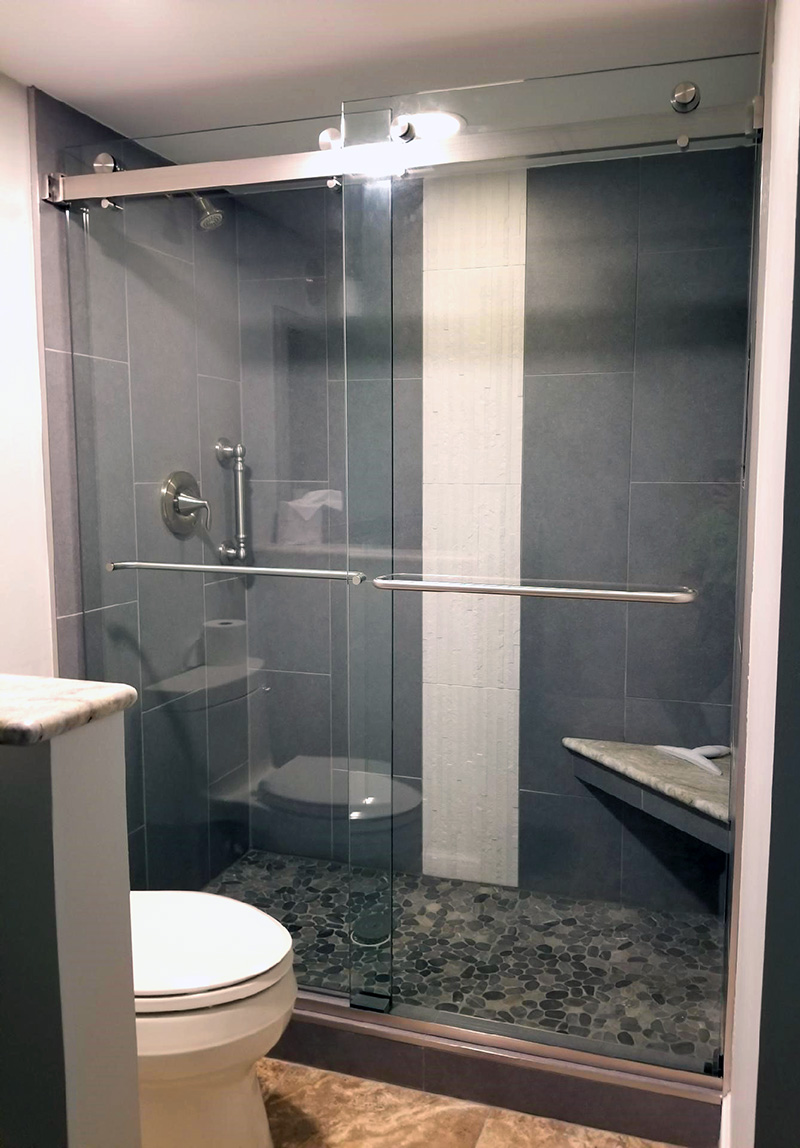
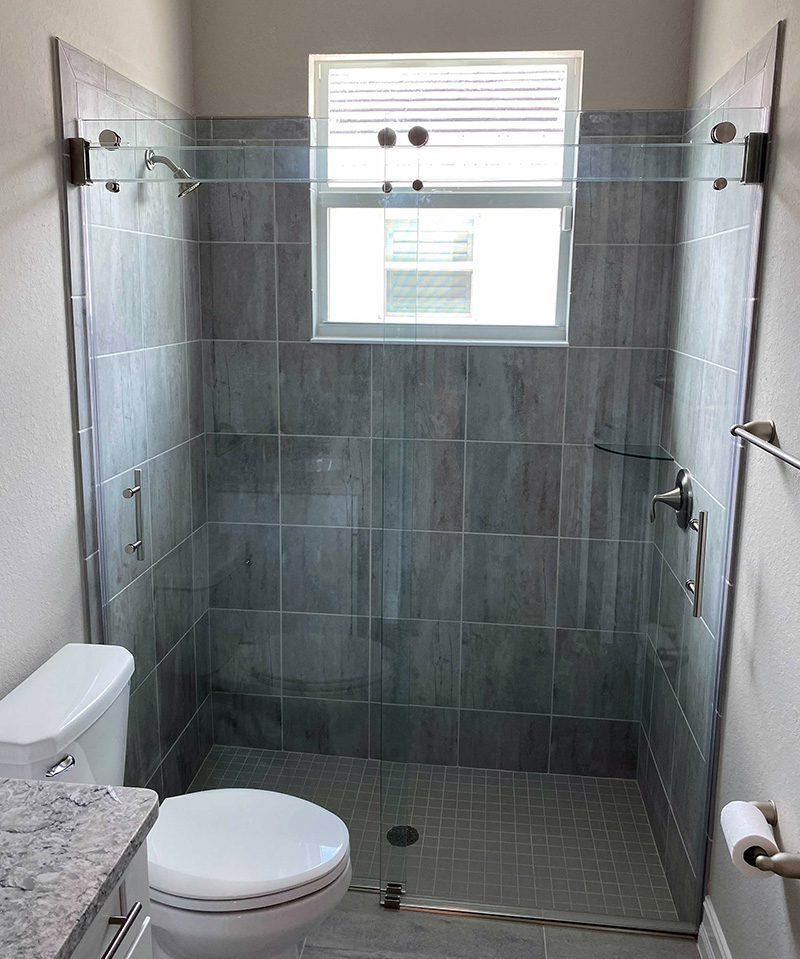
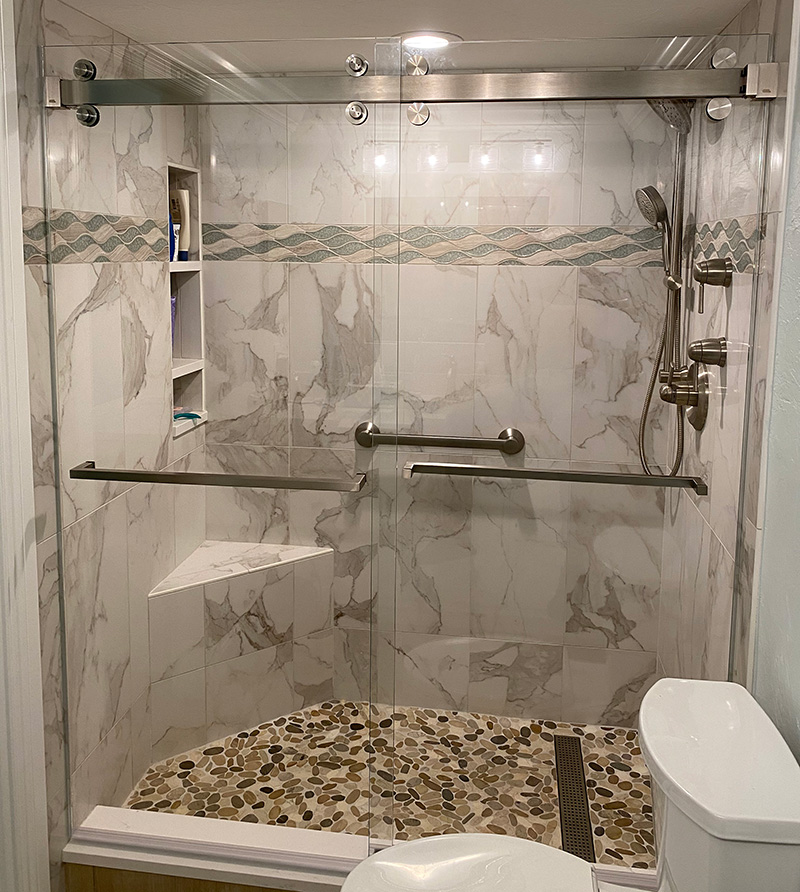
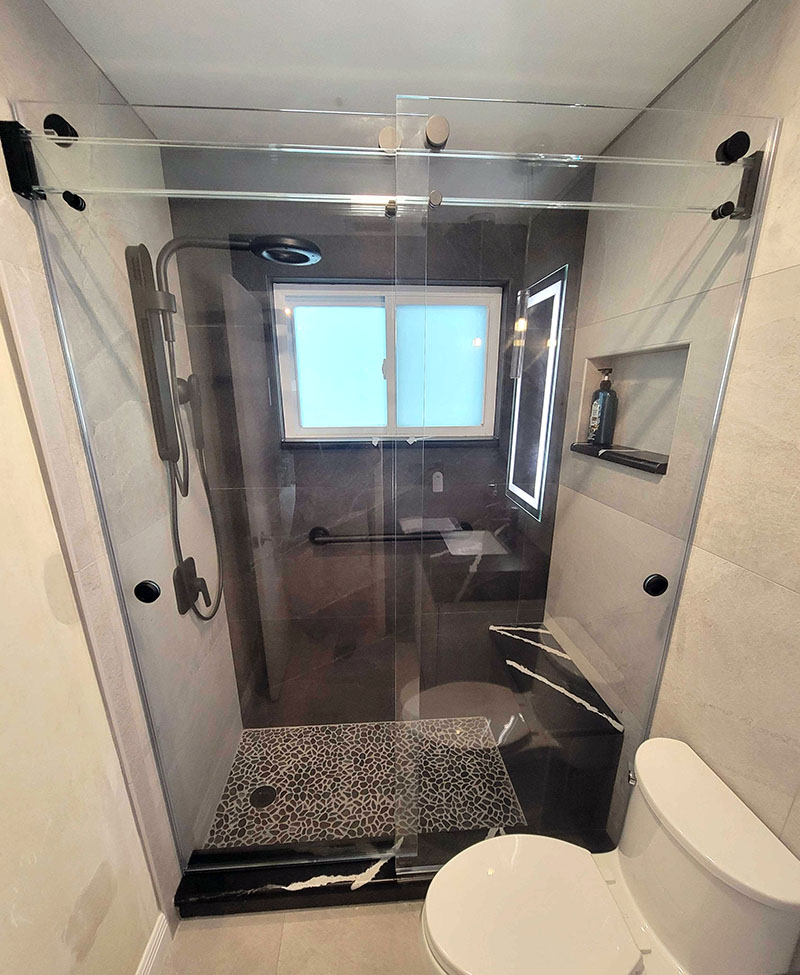
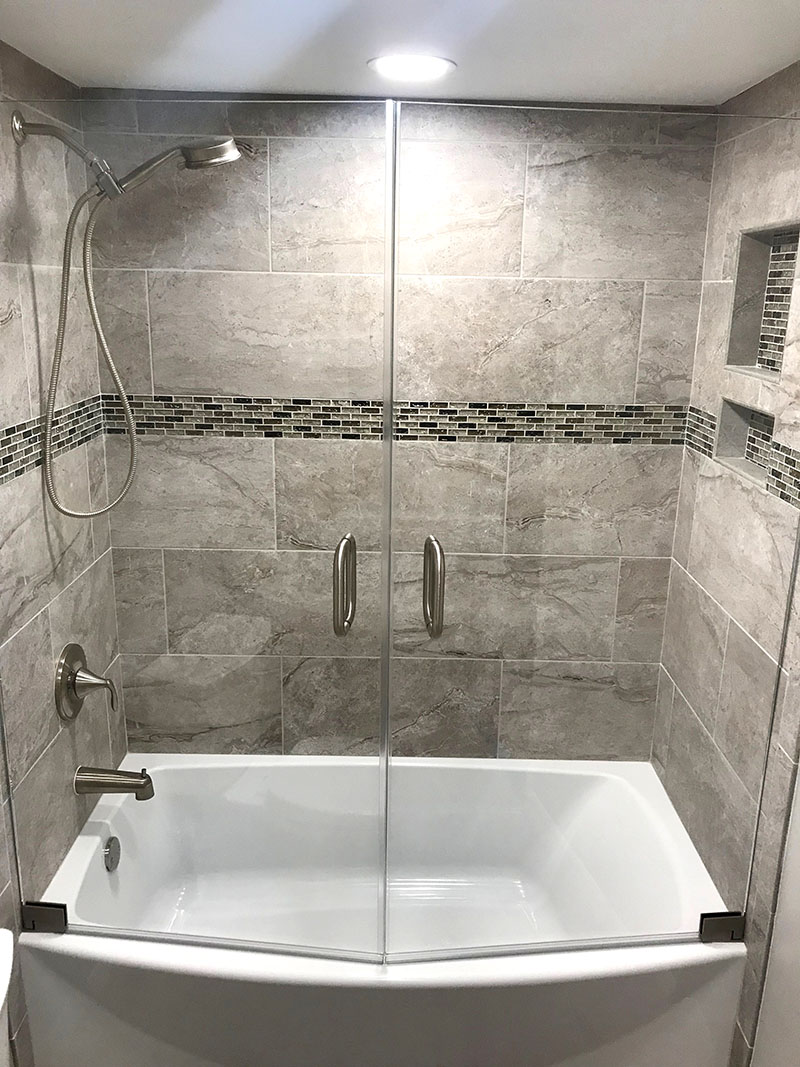
Frameless sliding shower doors, sometimes called bypass doors, consist of two or more glass panels that glide horizontally along a track system. Rather than swinging out into the bathroom, one panel slides behind or in front of the other to create an opening.
In a truly frameless design, the hardware is minimal: polished or brushed metal rollers and guides at the top and bottom edges of the glass, with no surrounding aluminum frame obscuring the view. The glass panels themselves do the heavy lifting, creating a sleek, uninterrupted visual plane.
At MY Shower Door, our MY Slide system features a heavy-duty header-and-hanger-wheel design that distributes the door’s weight evenly along the top track. This avoids the stress points found in older clip-mount systems, which are a common cause of failure in long-term installations.


Frameless Swinging Shower Doors (Pivot and Hinged Doors)
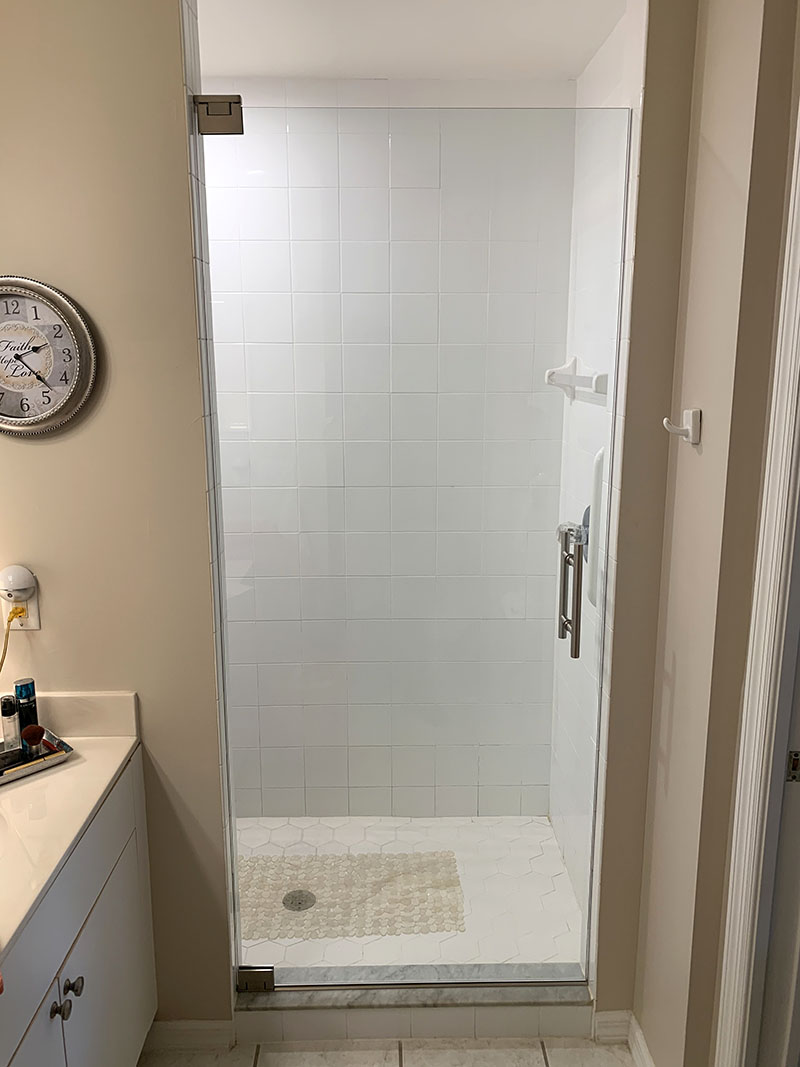
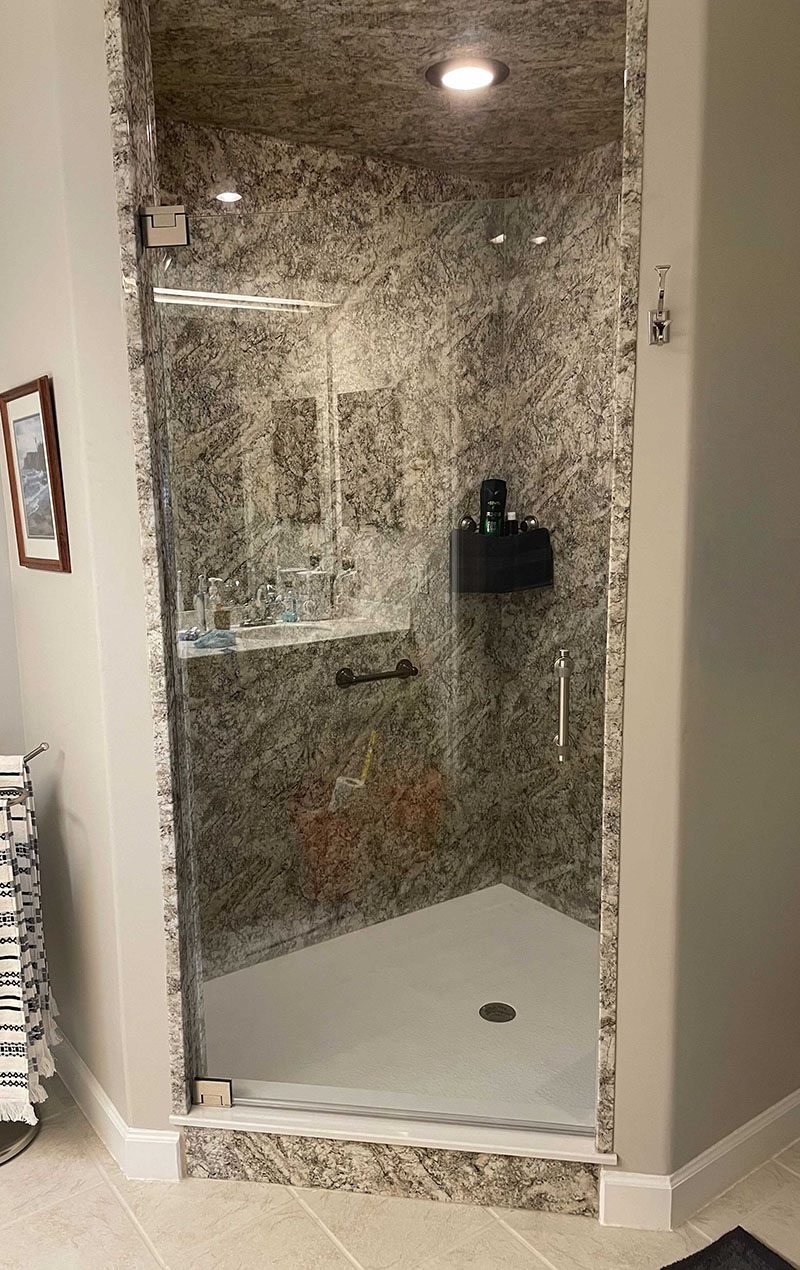
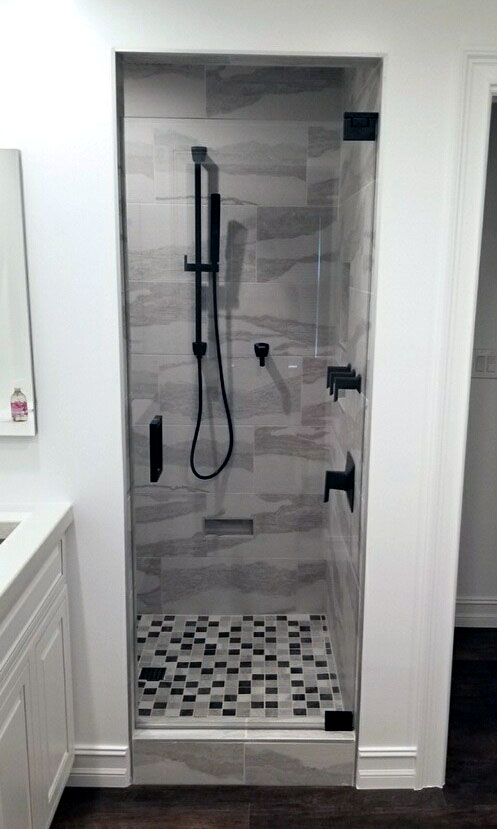
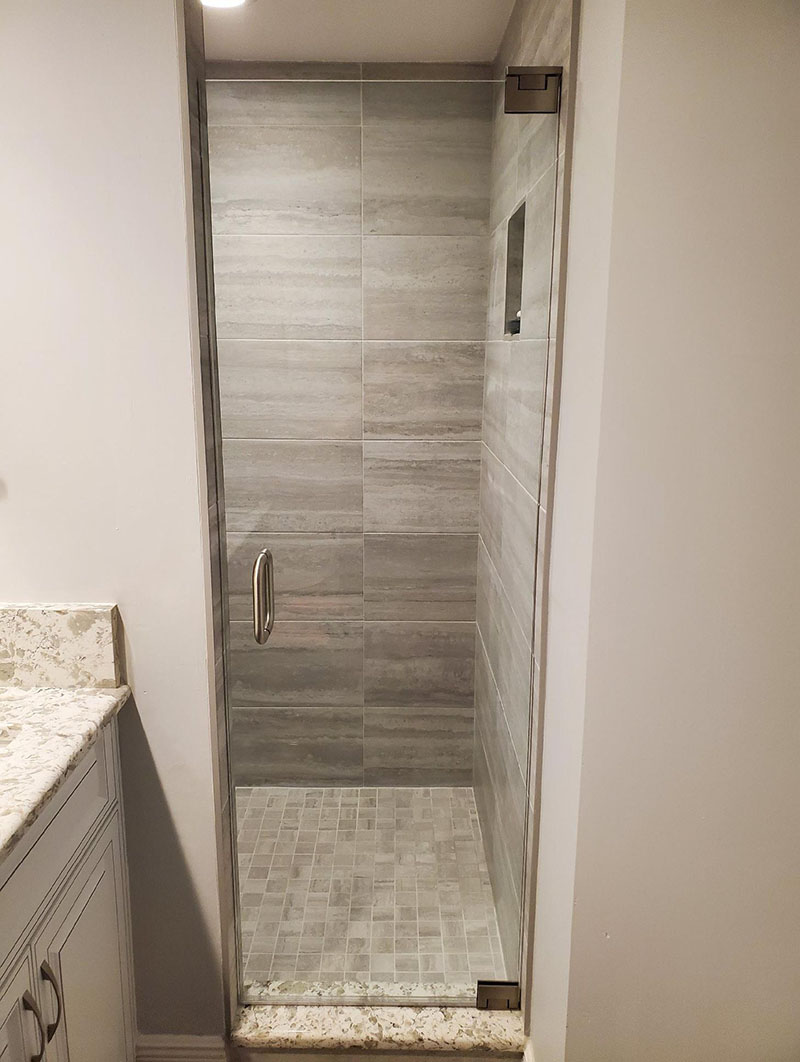
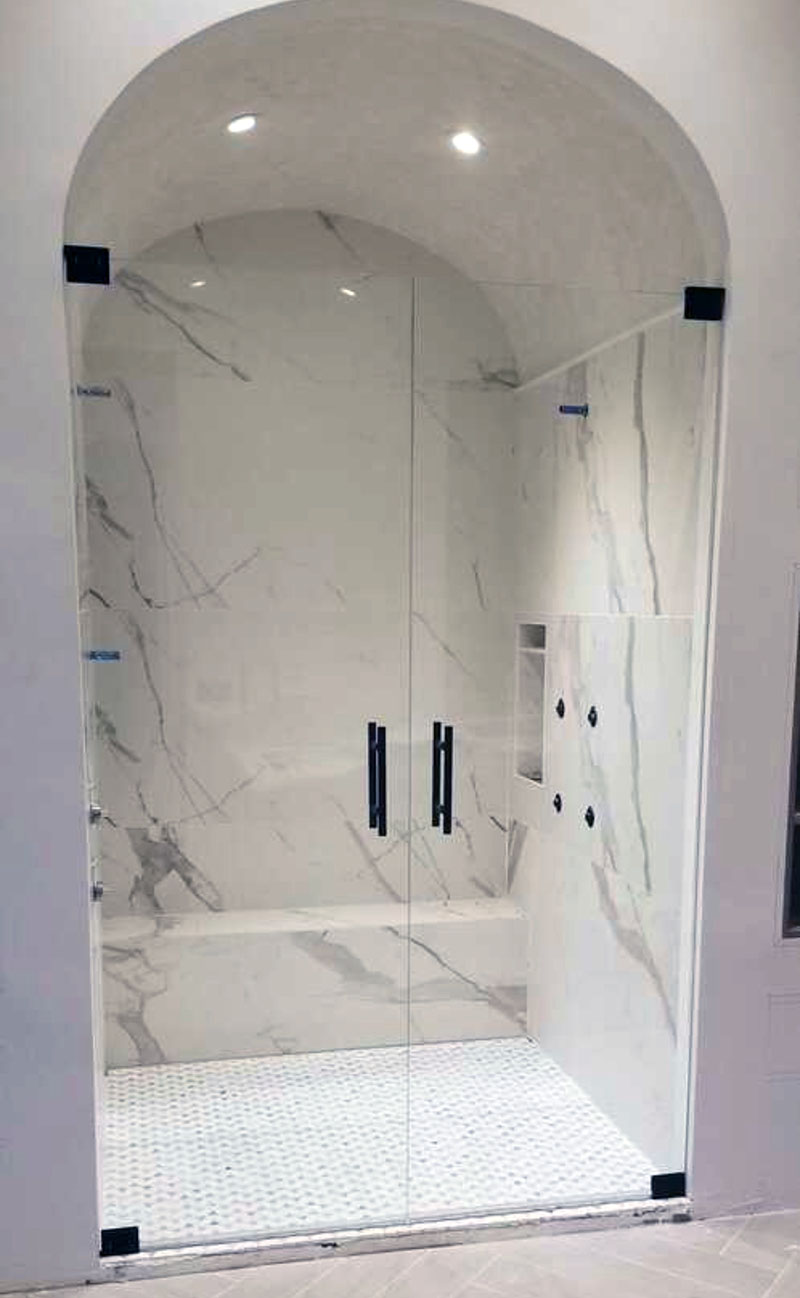
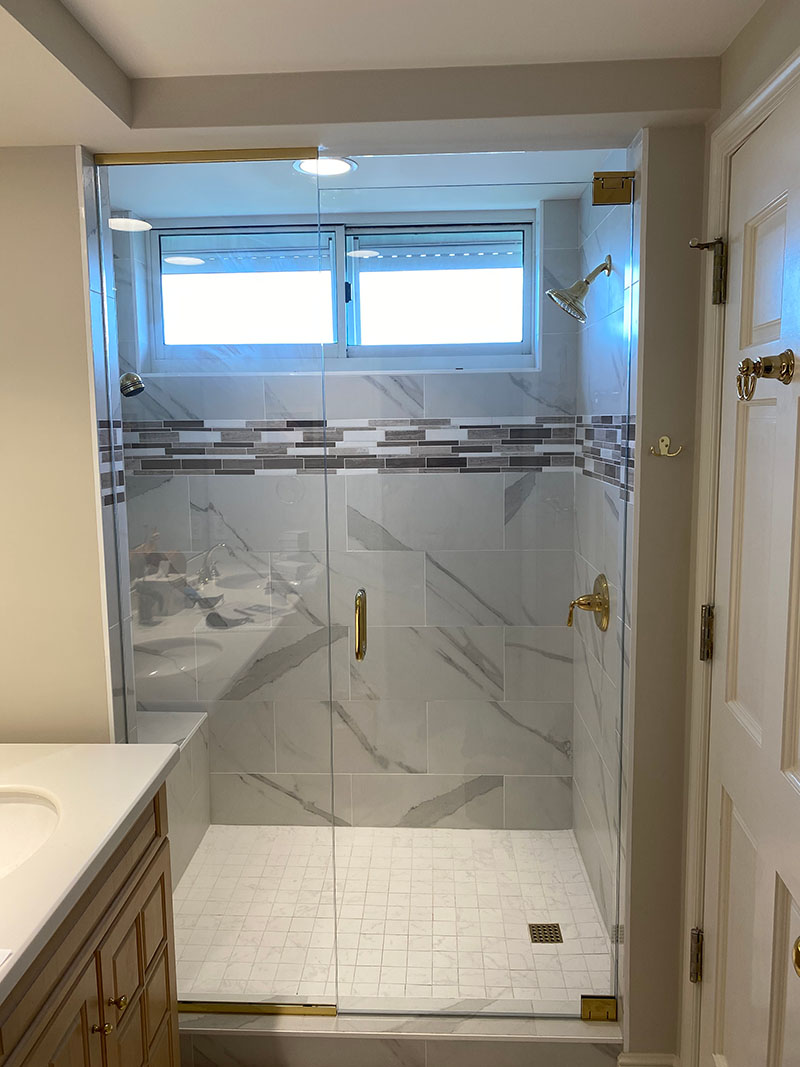
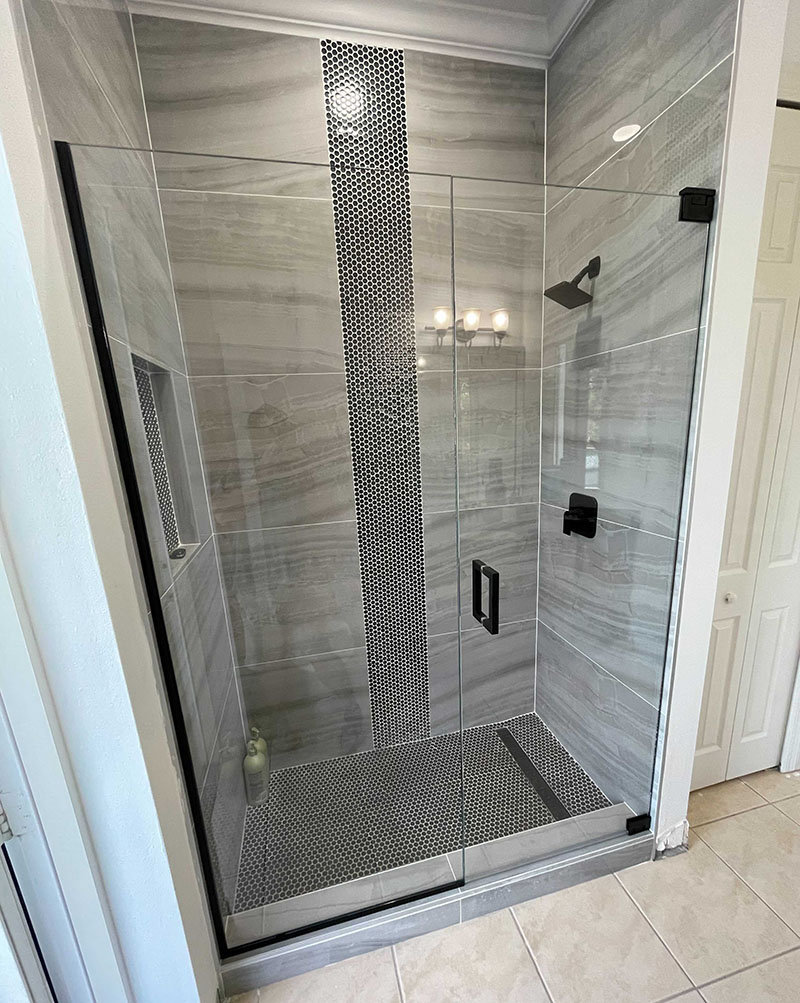
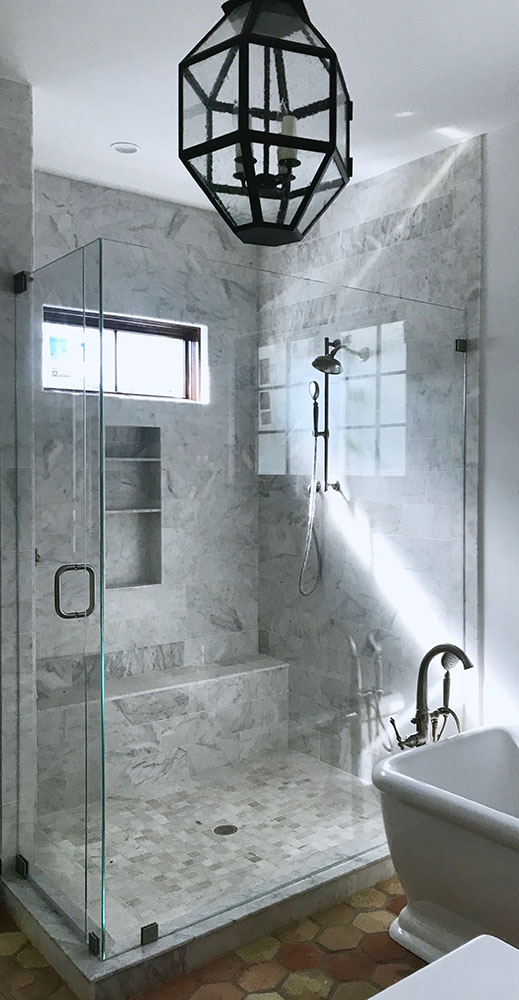
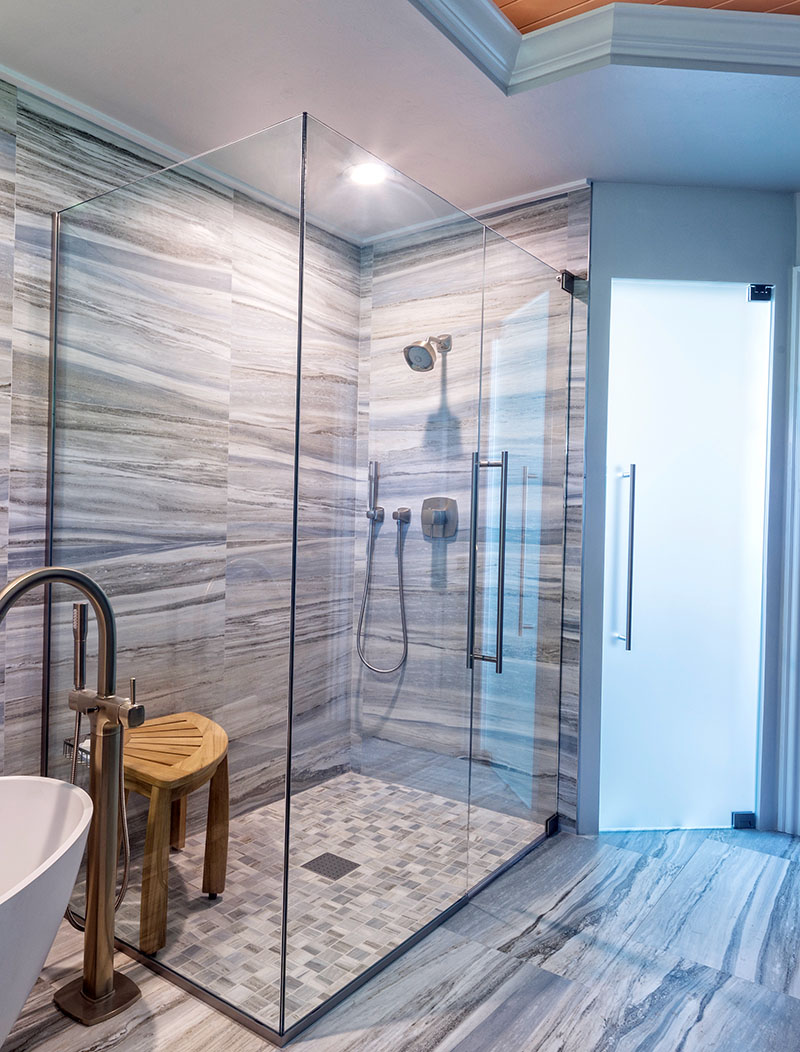
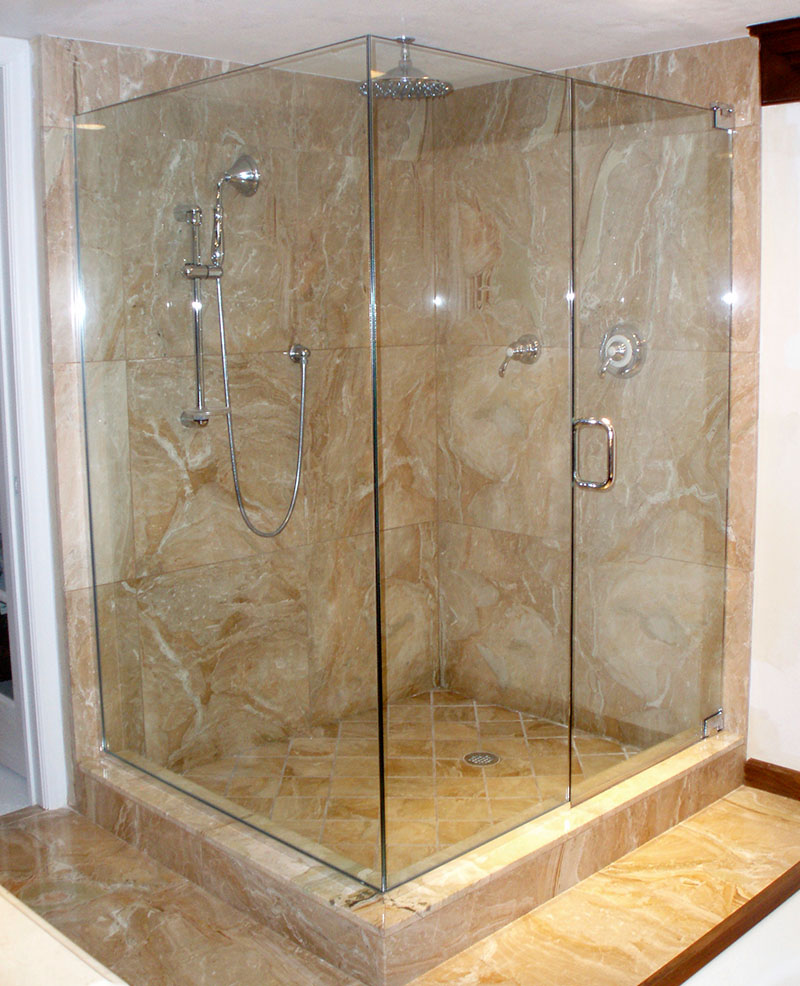
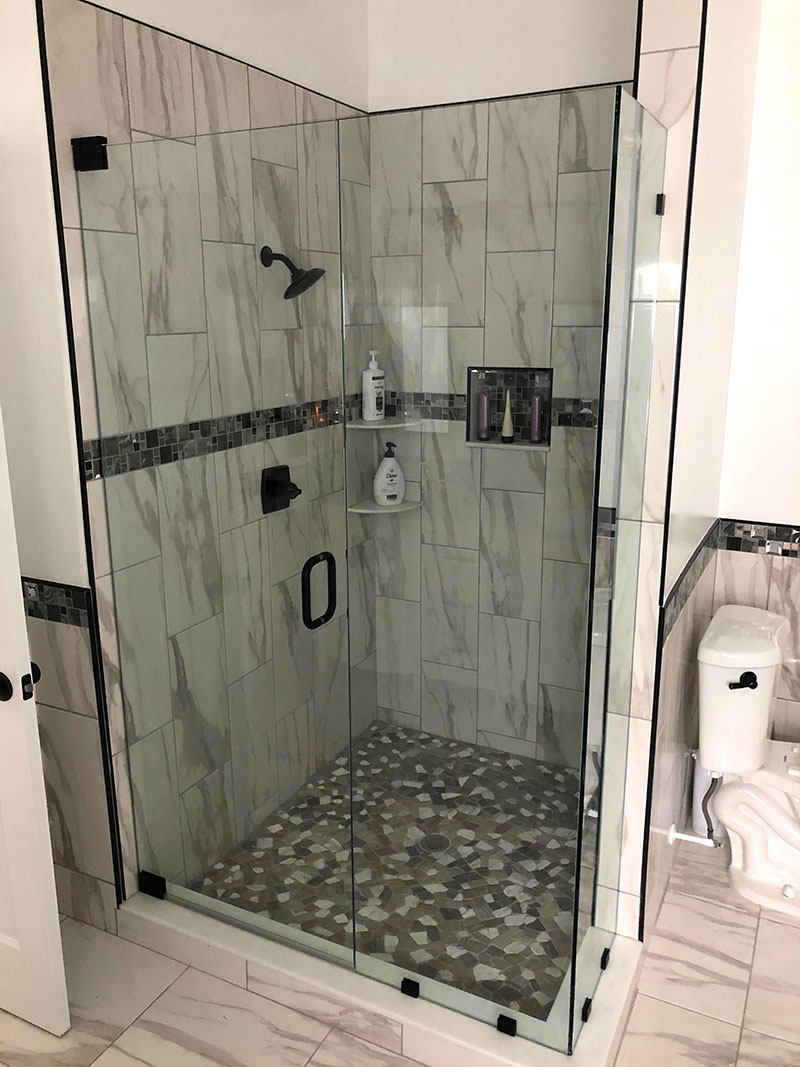
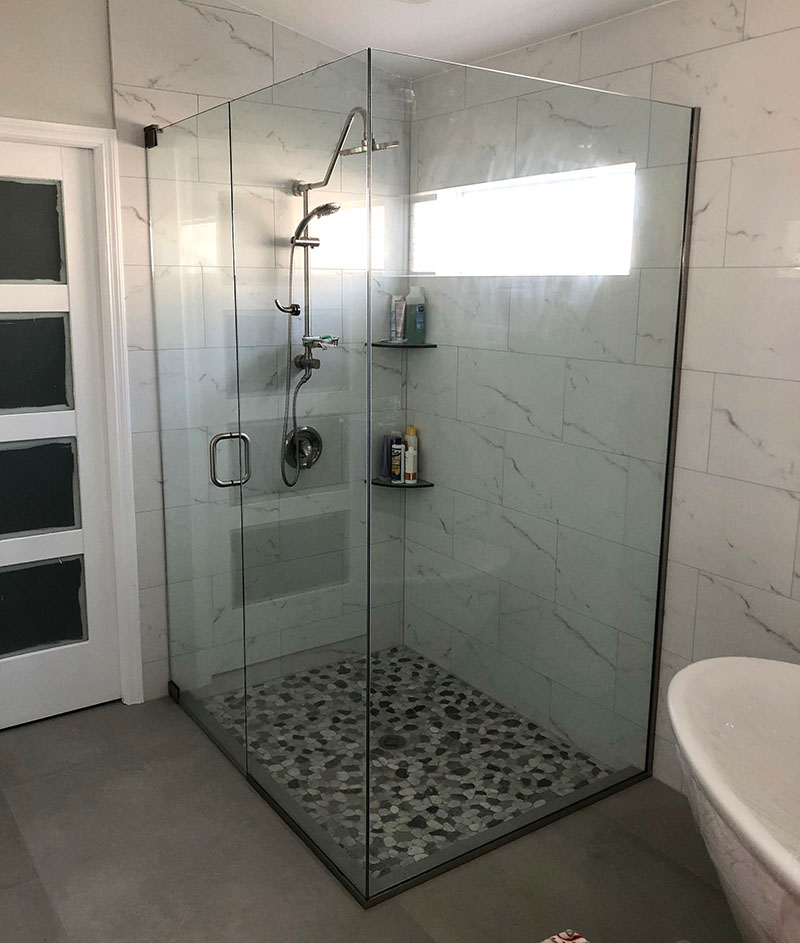
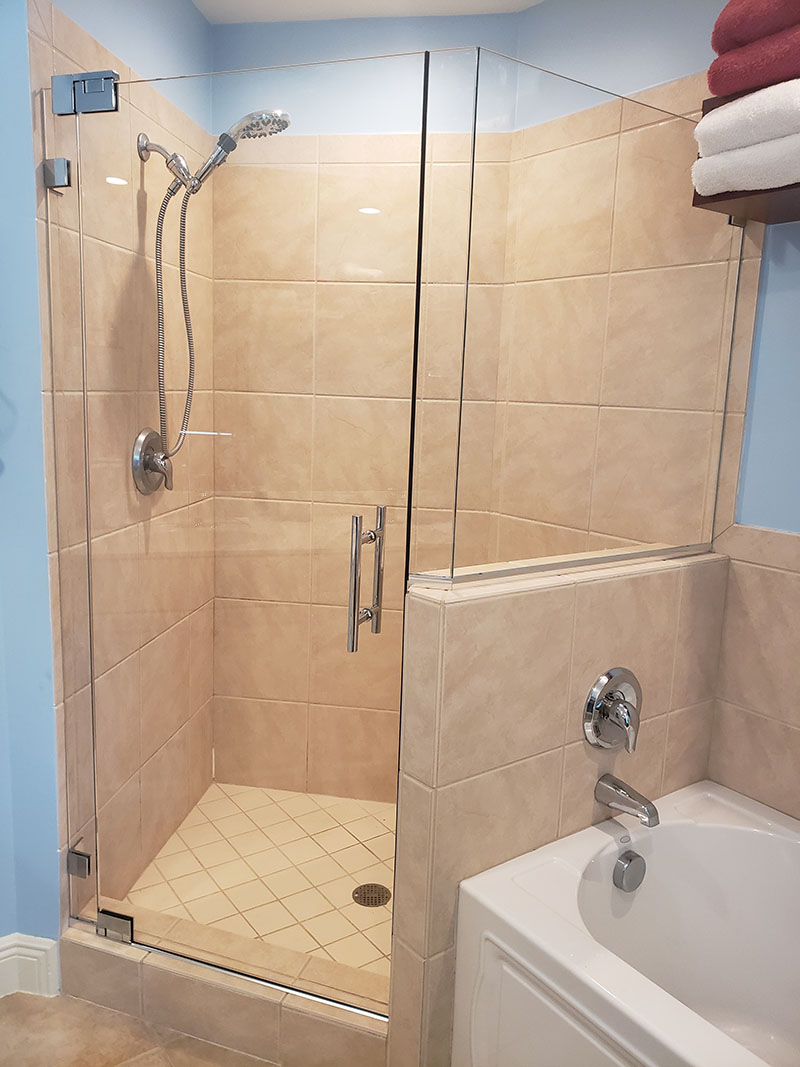
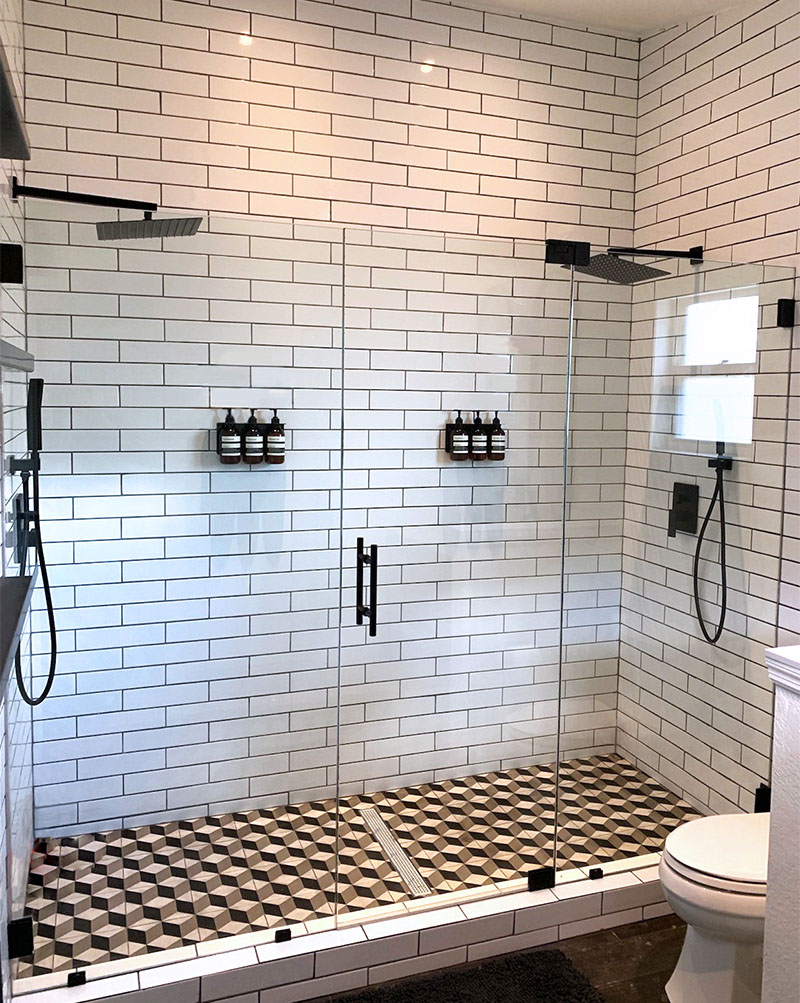
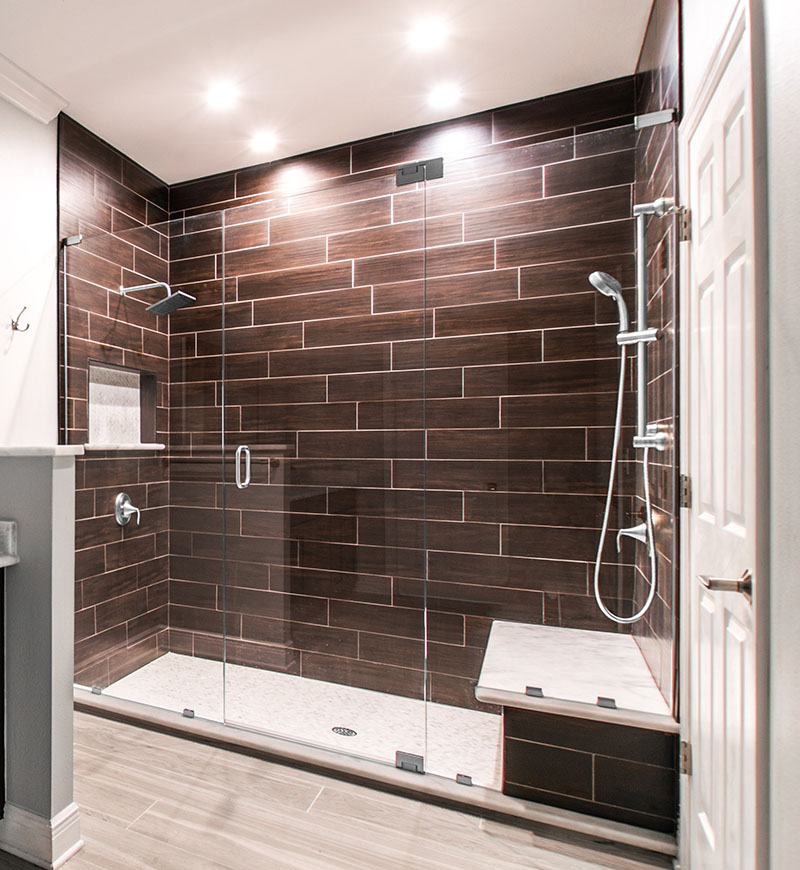
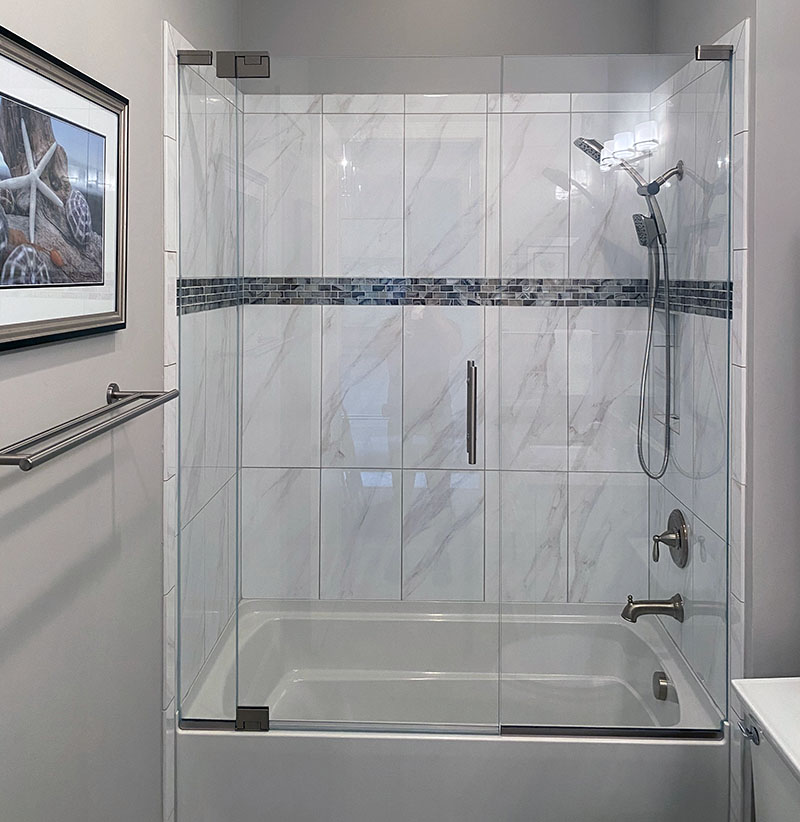
Frameless swinging shower doors operate on one of two mechanisms: pivot hinges (mounted at the top and bottom of the door, allowing rotation on a central vertical axis) or wall-mounted hinges (attached directly to the shower wall or an adjacent glass panel, allowing the door to swing in a full arc). Pivot doors often swing both inward and outward; hinged doors typically swing one direction.
At MY Shower Door, our proprietary MY Pivot Hinge redistributes about 90% of the door’s weight to a bottom anchor, reducing wall stress and extending the life of the installation. That matters especially in Florida bathrooms, where humidity and salt air accelerate hardware failure on cheaper systems.
Because swinging doors require no track and no stacked panel, they offer a wider, unobstructed opening, and that’s a significant advantage in certain contexts, as we’ll explore below.


Sliding Frameless Shower Doors: Pros and Cons
The Advantages
Space efficiency. This is the defining advantage of a sliding door. Since the panels move laterally rather than swinging through an arc, they never encroach on the floor space outside (or inside) the shower. In bathrooms where every square inch matters, this is enormous.
No swing-zone conflict. A swinging door needs a clear arc in front of it, typically 28 to 36 inches, depending on door width. Sliding doors eliminate this requirement entirely, making them far more compatible with nearby fixtures like toilets, vanities, and freestanding tubs.
Smooth, intuitive operation. Quality frameless sliding door systems glide easily with a single touch. For users with mobility considerations or families with young children, there’s no force required and no risk of a door swinging into someone.
Design versatility. Sliding doors work beautifully across a range of shower widths, and the panel-over-panel configuration can actually create interesting visual layering in a glass enclosure.
Works with various enclosure sizes. Sliding systems are well-suited for larger shower enclosures, typically 60 inches or wider, and perform especially well in alcove configurations where two walls frame the opening.
The Disadvantages
Cleaning and maintenance. The track system, even on high-quality frameless designs, creates channels where soap scum, hard water deposits, and mildew can accumulate. While frameless sliding door tracks are far easier to clean than their framed counterparts, they require more maintenance attention than the simple hinges of a swinging door.
Reduced opening width. Because one panel always sits behind the other, the maximum opening you can access at any one time is roughly half the total door width. For a 60-inch enclosure, your usable opening is around 26 to 30 inches. This can feel narrow when carrying towels, stepping in with a mobility aid, or cleaning the shower interior.
Not ideal for very small showers. Sliding doors require a minimum width to function properly, typically at least 48 inches. In compact walk-in or corner showers under that threshold, the mechanics simply don’t work well.
Water management complexity. Sliding doors don’t create a perfectly sealed enclosure. There’s inherent overlap between panels and a small gap at the center where they meet. While well-designed systems manage water effectively, the direction of your shower head matters significantly (more on this below).
Swinging Frameless Shower Doors: Pros and Cons
The Advantages
Maximum opening width. When a swinging door is open, the entire doorway is clear. For a 36-inch pivot door, you get 36 full inches of entry, no panel overlap, no structural obstruction. This matters for accessibility, for comfortable entry and exit, and for easy interior cleaning.
Superior water containment. A properly installed swinging door, whether hinged or pivot, creates a tight seal along its edges. With no center gap and no bypass track, water management is simpler and more reliable, especially when your shower head is positioned toward the door.
Easier cleaning. Hinges require minimal maintenance compared to a track system. A quick wipe of the hinge hardware is typically all that’s needed between deeper cleans.
Works beautifully in smaller enclosures. Swinging doors are ideal for showers that are too narrow to accommodate a sliding system, including corner showers, neo-angle designs, and compact alcove showers under 48 inches.
Pure frameless aesthetic. With no visible track running along the floor or ceiling, a pivot or hinged swinging door delivers the purest expression of frameless design: just glass and minimal hardware.
Inward-swinging option. In certain configurations (discussed under layout considerations), a door that swings inward, into the shower space, eliminates the swing-zone problem in the bathroom and can be paired with a small threshold or half wall.
The Disadvantages
Requires a swing zone. This is the central limitation of a swinging door, and it’s a significant one. If there’s a toilet, vanity, or wall within the arc of the door’s swing, you have a conflict, and that conflict ranges from mildly inconvenient to genuinely dangerous. The door needs clear floor space to operate.
Outward swing direction matters enormously. For safety reasons (imagine a door swinging into you while you’re standing in the shower), outward-swinging pivot doors are typically preferred. But that means the bathroom side of the door needs to be unobstructed, which isn’t always possible.
Less forgiving of layout constraints. A sliding door is relatively tolerant of surrounding fixtures; a swinging door is not. Any obstacle within the door’s arc creates a problem that must be resolved before installation.
Can feel heavy in large sizes. Large-format frameless pivot doors, especially those over 36 inches wide in 3/8-inch or 1/2-inch thick glass, are heavy. While quality pivot systems handle the weight, some users find them harder to operate than the smooth glide of a well-tuned sliding door.
How Your Bathroom Layout Affects the Decision
The type of shower door that’s right for you isn’t determined in the abstract. It’s determined by your specific bathroom. Let’s walk through the key layout factors one by one.
1. Vanities and Their Positioning
The position of your bathroom vanity relative to the shower opening is one of the most common sources of door-selection headaches, and one of the easiest to overlook until installation day.
Swinging doors and nearby vanities don’t mix. If your vanity counter, cabinet door, or sink faucet falls within the arc of a swinging shower door, you’ll have a conflict every time you exit the shower. Even a vanity positioned 24 inches from the shower edge may be within the swing zone of a 36-inch door.
The rule of thumb: Measure from the hinge point of a swinging door through its full arc (approximately equal to the door width). If anything, including an open vanity drawer, falls in that zone, reconsider.
Sliding doors solve this completely. Because they move laterally, they never extend beyond the plane of the shower opening. A vanity can be positioned immediately adjacent to the shower without any conflict.
Best approach: If your vanity is within 36 inches of the shower opening and there’s no clear floor zone in front of the shower, choose a sliding door. If the vanity is further away, across the room or on a perpendicular wall, a swinging door can work beautifully.
2. Proximity to Toilets
Toilets adjacent to showers are a layout reality in many bathrooms, particularly in master baths with a dedicated wet zone. The positioning here creates two distinct challenges: the swing conflict and the water splash concern.
Swing conflict: A toilet placed beside or in front of a shower with a swinging door is a genuine safety issue. Someone seated on the toilet during an inward- or outward-swinging door operation can be struck by the door. This is non-negotiable: any swinging door must have a clear path of travel that doesn’t conflict with typical toilet use.
The proximity threshold: Industry standard recommends at least 15 inches of clearance from the centerline of a toilet to any adjacent fixture. If your toilet falls within 15 to 24 inches of your shower opening, a swinging door’s arc will almost certainly create a conflict.
Sliding doors are the safe choice here. They stay within their frame, create no arc, and can be positioned very close to a toilet without any interference.
Best approach: If the toilet is within 36 inches of the shower opening, use a sliding door, full stop. If the toilet is across the bathroom or on a perpendicular wall well away from the shower, either door type can work.
3. Narrow Bathrooms
A narrow bathroom, typically under 60 inches in width, concentrates every layout challenge. Everything is closer together, swing zones are more likely to conflict, and floor space is at a premium.
The hallway bathroom problem. In long, narrow bathrooms where fixtures are arranged in a line (toilet, vanity, shower in sequence), a swinging shower door positioned at the end of that line can block the entire walkway when open. Imagine trying to enter the shower while someone else needs to pass behind you.
Sliding doors reclaim the corridor. Because they move within their own footprint, they leave the bathroom’s walking path completely unobstructed regardless of how narrow the room is.
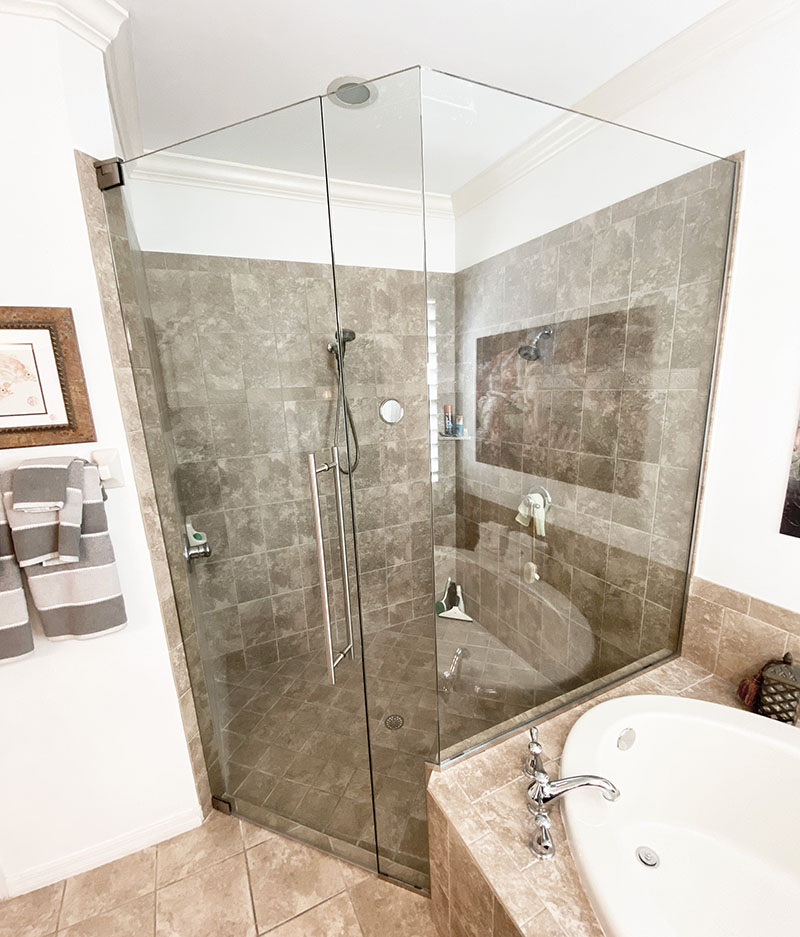
Corner showers in narrow bathrooms are a special case. Neo-angle and quadrant-shaped shower enclosures are often designed specifically for narrow rooms, and they frequently use swinging doors, but oriented toward the open center of the bathroom rather than along the narrow corridor. In this configuration, the door swings into the largest available open area, resolving the conflict.
Best approach: In narrow bathrooms with a linear fixture arrangement, sliding doors are strongly preferred. In narrow bathrooms with a corner or angled shower that opens toward a clear central zone, a swinging door can work if the swing path is unobstructed.
4. Curbs and Half Walls
The presence of a curb (a raised threshold at the base of the shower opening) or a half wall (a knee-height or waist-height glass or tile wall beside the shower opening) significantly affects which door type makes practical and aesthetic sense.
Curbs and swinging doors. A swinging door installed over a curb must clear the curb on its arc. Inward-swinging doors work well here because they swing above the curb plane into the shower space. Outward-swinging doors can conflict with curbs, depending on hinge placement. Pivot doors, which rotate on a central axis, can be designed to swing both in and out and typically handle curbs gracefully.
Curbs and sliding doors. Sliding door systems typically require a bottom track or guide channel. On a curbless shower, this bottom guide is often mounted flush to the floor, simple and clean. On a curbed shower, the bottom track can be integrated into or mounted on top of the curb, but the joint between track and curb tile requires careful sealing to prevent water intrusion.
Half walls and sliding doors. A half wall creates a natural mounting point for one side of a sliding door system, with the other side attached to the full shower wall. This configuration works well and is common in larger master bathrooms with open, contemporary designs.
Half walls and swinging doors. A half wall provides an excellent attachment point for a wall-mounted hinge, allowing a swinging door to pivot from the half wall’s top edge or face. This creates a dramatic, floating-glass effect that’s become a signature of high-end bathroom design.
Best approach: Both door types can work with curbs and half walls, but the details matter. For curbless showers, swinging hinged doors are often the cleaner installation. For curbed showers with precise tile work, sliding doors with integrated track systems offer a tidier aesthetic. Half walls pair beautifully with either type; swinging doors from a half wall create a particularly striking visual effect.
5. Water Direction: Preventing Leaks and Ensuring Functionality
Water direction is perhaps the most technically critical layout consideration, and the most often underestimated by homeowners choosing a shower door type. Where your shower head is positioned relative to your door determines how much water pressure will directly contact the door system, and that affects how well each door type performs over time.
The basic physics: Water hitting a door directly, especially under high pressure from a rain head or body sprays, will find any gap or imperfection in the seal and migrate outward. Both sliding and swinging door systems are designed to manage water, but they do so in fundamentally different ways.
Sliding doors manage water through panel overlap, and the central gap where panels meet is the most vulnerable point. Swinging doors rely on continuous edge seals with no center gap, but they have other sensitivities depending on where the shower head is positioned.
Shower head placement for sliding doors:
- The shower head should ideally be positioned on the wall opposite or perpendicular to the door, directing water toward the back of the enclosure and away from the sliding panels.
- If the shower head must be on the same wall as the door, aim the spray angle toward the shower floor rather than horizontally toward the center gap between panels.
- Rainfall ceiling mounts (overhead shower heads) are generally fine with sliding doors because the water falls vertically and doesn’t press directly against the panels.
- High-pressure body sprays mounted near the door, especially at torso height pointing toward the center gap, are the most problematic configuration for sliding doors.
Shower head placement for swinging doors:
- Swinging doors handle a wider range of shower head positions because the door edge seals are continuous and there’s no center gap.
- The primary caution is avoiding direct, high-pressure spray aimed at the hinge side of the door, where the gap between door and frame (or wall) is smallest and most likely to channel water under sustained pressure.
- Pivot doors (which have a gap on both sides where they rotate) benefit from shower heads positioned on the back wall or side walls, directing spray toward the drain.
- Inward-swinging doors are particularly water-smart: if water does reach the door, it runs back into the shower rather than out toward the bathroom floor.
The drain position matters too. Ideally, your shower drain should be positioned toward the center or back of the enclosure, not directly in front of the door opening. A drain positioned right at the threshold of a swinging door means that water flowing toward the drain has to pass directly over the door’s bottom seal gap. Positioning the drain away from the door opening creates a natural water migration path that keeps water inside the enclosure.
Best approach: If your shower head is on the same wall as the door or positioned to spray directly toward the opening, choose a swinging door with tight edge seals. If you have a curbless design with a linear drain along the back wall and your shower head is on the back or side wall, either type works well. When installing body sprays, consult with your shower door professional about panel orientation and spray angle before finalizing the door type.
Quick Comparison: Sliding vs. Swinging Frameless Shower Doors
Feature |
Sliding Frameless Door |
Swinging Frameless Door |
|---|---|---|
| Space requirement (outside shower) | None, door stays within its own footprint | Requires a clear swing arc of 28–36+ inches/td> |
| Minimum shower width | ~48 inches recommended | Can be as narrow as 22–24 inches |
| Opening width when in use | ~50% of total door width | Full door width (100%) |
| Proximity to toilet | Excellent, no swing conflict | Requires clear floor space; potential safety issue |
| Proximity to vanity | Excellent, no swing conflict | Needs vanity clear of swing arc |
| Narrow bathroom compatibility | Excellent | Limited; depends on door orientation |
| Curbless shower compatibility | Very Good (clean bottom guide) | Excellent (No track needed) |
| Curbed shower compatibility | Good (integrated track) | Very Good (pivot over curb) |
| Half wall compatibility | Good | Excellent (dramatic aesthetic) |
| Water containment | Good; avoid direct spray at center gap | Excellent; continuous edge seals |
| Best shower head position | Back wall or ceiling mount | Back/side wall or any direction |
| Maintenance requirements | Moderate (track cleaning) | Low (simple hinge wipe-down) |
| Accessibility | Good (easy operation) | Excellent (full-width opening) |
| Aesthetic purity | Clean; horizontal panel layering | Maximum; no visible track |
| Ideal enclosure type | Alcove, large walk-in | Corner, neo-angle, alcove, walk-in |
| Typical price range | Moderate to High | Moderate to High |
| Installation complexity | Moderate | Moderate to High (Pivot alignment) |
Best-For Recommendations
Choose a Sliding Frameless Door When:
- Your bathroom is narrow or fixtures are tightly spaced. If a toilet, vanity, or wall is within 30–36 inches of your shower opening, a sliding door is the safe and practical choice.
- You have an alcove shower 48 inches or wider. The classic alcove configuration, shower set into a three-wall nook, is the natural home for a sliding bypass door.
- Your shower head is positioned to spray toward the door. The panel overlap of a sliding door, when properly oriented, manages water effectively when spray is from the side. Just keep direct pressure away from the center gap.
- You want low-effort daily operation. The smooth glide of a quality sliding system is hard to beat for a quick, easy open-and-close experience.
- You have a large family or high-traffic bathroom. Sliding doors are forgiving of varying user heights, strengths, and approaches. There’s no wrong way to push or pull them.
Choose a Swinging Frameless Door When:
- You have a corner or neo-angle shower. These shower configurations almost always require a swinging door, and the geometry naturally orients the swing toward open bathroom space.
- You prioritize accessibility. A full-width door opening is critical for users with mobility aids, and swinging doors deliver that. Inward-swinging pivot doors in particular create wide, barrier-free entry.
- Your shower features high-pressure or multi-spray shower heads. The continuous edge seals of a swinging door provide superior water containment when shower heads are powerful or positioned near the door.
- Your shower is compact (under 48 inches wide). Swinging hinged or pivot doors work in enclosures that are simply too narrow for a functional sliding system.
- You have a half wall. A swinging door mounted to a half wall with a wall-to-glass hinge creates a stunning visual effect that’s become a hallmark of luxury bathroom design.
- Minimal maintenance is a priority. If you’d rather wipe down simple hinges than clean a track, a swinging door keeps maintenance to a minimum.
- The bathroom has ample clear floor space in front of the shower. If you have a large master bath with generous open floor space outside the shower, a swinging door’s only real disadvantage disappears entirely.
A Note on Hybrid Approaches
For bathrooms that don’t fit neatly into either category, hybrid solutions exist. A swinging door paired with a fixed glass panel (a configuration sometimes called “door-plus-return”) allows you to create a wide enclosure where only a portion of the opening swings, reducing the arc size while maintaining a full-width aesthetic. Similarly, bi-fold frameless doors, which fold accordion-style, offer a compact footprint closer to a sliding door while providing a larger opening than a standard bypass system.
These options are worth discussing with your frameless shower door specialist when your layout presents unusual constraints.
Final Thoughts: Layout First, Aesthetics Second
Both sliding and swinging frameless shower doors are genuinely beautiful products. In the best circumstances, a spacious master bath with carefully planned fixture spacing, either one would be an excellent choice, and the decision might come down purely to personal preference.
But in the real world, most bathrooms have at least one layout constraint that tips the scales. A toilet too close to the shower. A vanity on the wrong wall. A narrow corridor that leaves no room for a swing. A powerful rainfall shower head aimed directly at the door.
The smart approach is to start with your layout, measure, map your fixture positions, identify any potential swing conflicts, and let those physical realities guide your choice. Then, within the door type that your layout demands, you’ll find a wide range of glass thicknesses, hardware finishes, and design details to match your aesthetic vision.
MY Shower Door is a family-owned company that has installed more than 145,000 frameless shower enclosures across Florida and the Carolinas since 2003. Every installation is performed by our own in-house specialists who do nothing else, trained to handle the precise measurement, fabrication, and fitting that a frameless enclosure demands. Our team can walk you through a site assessment, review your floor plan, and help you identify not just which door type fits your space, but which specific system, hardware finish, and glass profile will make your bathroom look and function exactly the way you’ve imagined.
Ready to explore your options? Contact MY Shower Door for a consultation, or Request A Free Estimate to browse our full collection of frameless sliding and swinging shower door systems. We serve 11 locations across Florida and the Carolinas, including Fort Myers, Cape Coral, Naples, Sarasota, St. Petersburg, Tampa, Orlando, Boca Raton, Charlotte NC, and our newest showroom in Rock Hill, South Carolina.